The National Science and Technology Awarding Conference, the Academician Assembly of the Chinese Academy of Sciences and Chinese Academy of Engineering, and the 11th National Congress of the China Association for Science and Technology were held in Beijing on the morning of the 8th,2026. The 2025 National Science and Technology Awards were announced, and our college led in winning 3 National Science and Technology Awards in disciplines related to large-scale civil engineering.
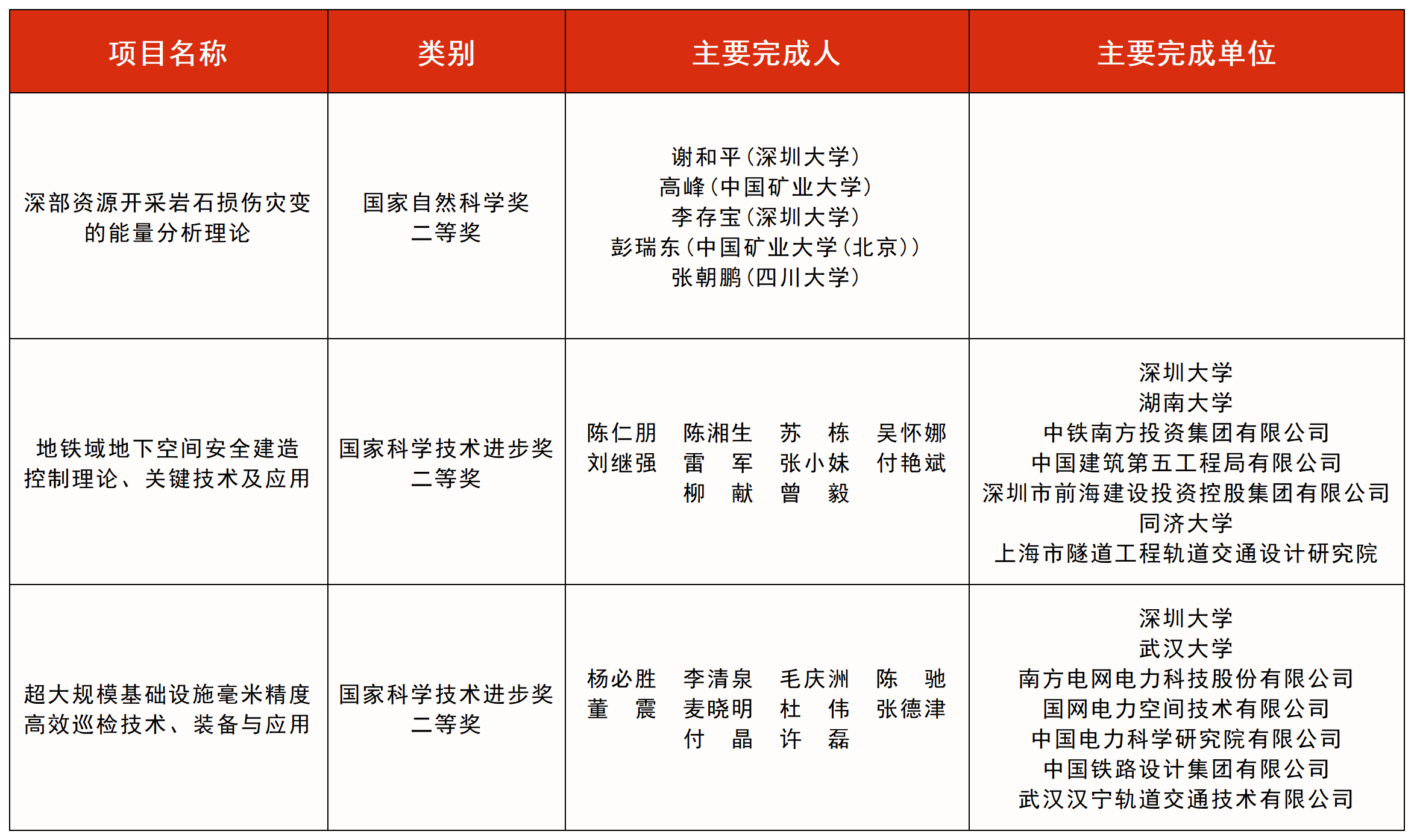
The project "Energy Analysis Theory of Rock Damage and Disaster in Deep Resource Extraction", led by the team of Academician Xie Heping, has been awarded the second prize of the National Natural Science Award.
The project "Control Theory and Key Technologies for Safe Construction in Subway-Domain Underground Space and Their Applications", led by the team of Academician Chen Xiangsheng, has been awarded the second prize of the National Science and Technology Progress Award.
The project "Millimeter-level Precision and Efficient Inspection Technology, Equipment, and Application for Ultra-large-scale Infrastructure", led by the team of Academician Li Qingquan, has been awarded the second prize of the National Science and Technology Progress Award.
Extracting resources from the depths of the Earth:
Establish a new theory of energy analysis for deep rock mechanics

Extracting resources from the deep Earth is a major national demand and a core task of the deep Earth strategy. The extraction of deep resources is challenging, prone to disasters, and difficult to predict. The fundamental reason is that the rock occurrence environment, internal structure, and mining disturbance in deep mining are extremely complex, making traditional rock mechanics theory analysis inapplicable. The analysis of damage and fracture in rock-like quasi-brittle materials is a century-old problem. It is more challenging to consider both the physical and mechanical boundary conditions of deep mining and the theoretical modeling and analysis of rock damage and fracture caused by deep mining disturbance.
In response to this international frontier challenge, Academician Xie Heping took the lead in convening the Xiangshan Science Conference in the field of deep mining to explore new theories and methods for solving complex engineering scientific problems such as deep mining. He proposed a new concept for rock damage and failure analysis based on an energy perspective. After long-term research, the team made original breakthroughs in the mechanical boundary definition, failure mechanism interpretation, and energy theory characterization of rock damage and fracture energy analysis in deep mining. They established an energy analysis theory for rock damage and disaster in deep mining, achieving a comprehensive analysis of the entire process from local damage to overall disaster in rocks under deep mining conditions. The relevant achievements provide theoretical support for the safe and efficient development of deep resources and the early warning and prevention of major engineering disasters.
This project has broken through the long-standing cognitive limitations of people towards the concept of "deep mining", pioneered a new direction of energy analysis in global deep mining rock mechanics theory, and opened up a new path for the theory and early warning methods of engineering disasters in deep mining.
Going Underground for Space:
Cracking the Global Challenge of Safe Construction in Subway-Domain Underground Space

With the continuous acceleration of China's urbanization process, the safe, intensive, and efficient utilization of underground space within the control protection zones on both sides of subway tunnels has become a major demand. To this end, after nearly 20 years of research, the team led by Academician Chen Xiangsheng has established a subway-domain underground space safety construction control theory and method centered on "prediction theory-index threshold-control method". This has overcome the challenges of unclear mechanisms of stratum disturbance and structural deformation, as well as the lack of safety construction control theory. The team has developed key construction technologies for "force system independence and deformation isolation" in underground spaces crossing/near subway tunnel, solving the problem of millimeter-level deformation control in subway tunnels and achieving a significant breakthrough in subway safety protection, which has been scientifically upgraded from scale control to tunnel structural safety control. Additionally, the team has developed key technologies for the "force system balance and collaborative compensation" of subway station hubs during renovation and expansion, addressing the challenges of structural deformation regulation and instability prevention and control during renovation and expansion, and achieving a leap from traditional passageways or local connectivity to the integrated renovation and expansion of old and new spaces.
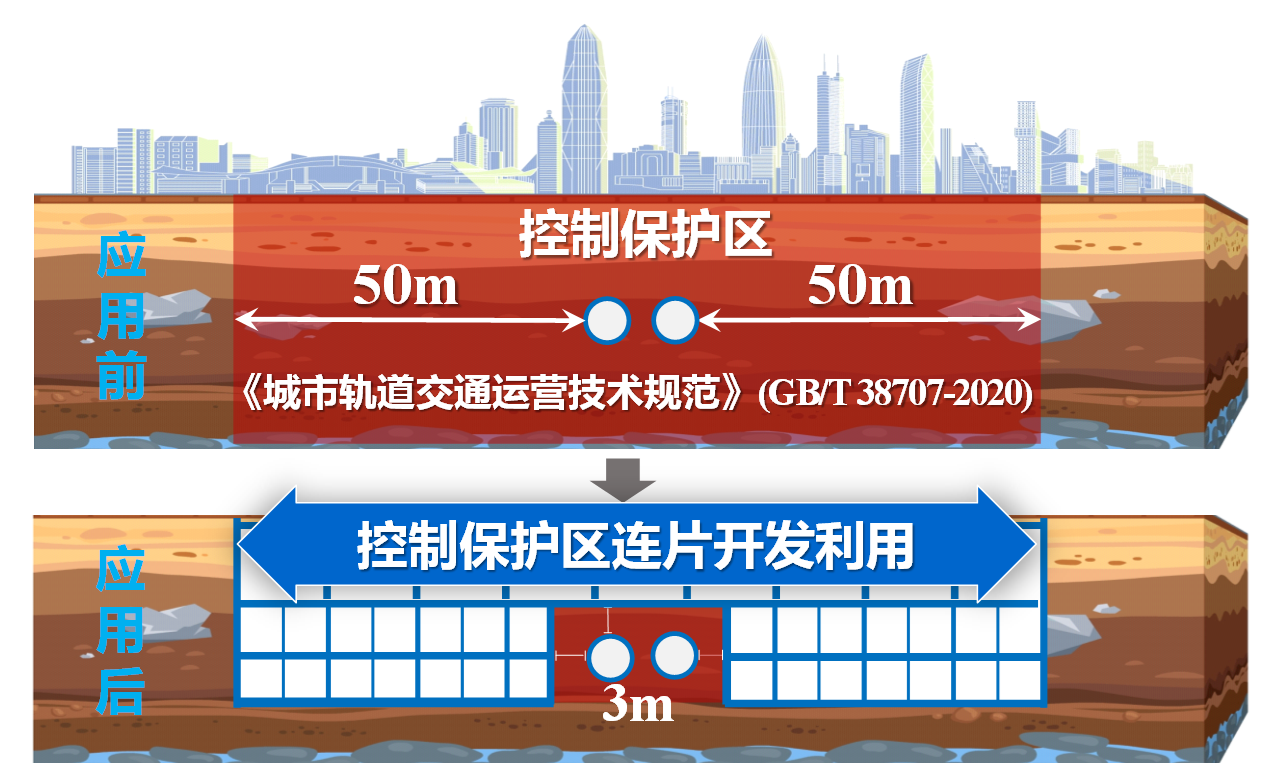
This achievement has been applied in cities such as Shenzhen, Shanghai, Guangzhou, and Changsha, releasing a large amount of land resources that were previously difficult or even impossible to utilize within controlled and protected areas. In particular, it has solved the worldwide problem of intensive land use in the Shenzhen Qianhai Shenzhen-Hong Kong Modern Service Industry Cooperation Zone, a major national strategy. It is of great significance for implementing the spirit of the Central Urban Work Conference and the "Opinions of the CPC Central Committee and the State Council on Promoting High-quality Urban Development", promoting sustainable urban development, and building a beautiful China.
Millimeter-level intelligent inspection empowers the infrastructure construction of major countries:
Reinventing the safety operation and maintenance system for major projects

China ranks first globally in terms of the scale of major infrastructure such as power grids, high-speed railways, and tunnels, serving as a crucial cornerstone for safeguarding socio-economic stability and national strategic security. Deformation of infrastructure can lead to significant safety hazards, and inspection is the core guarantee for its safe operation. Current methods suffer from low measurement efficiency, numerous blind spots, and difficulties in balancing accuracy and efficiency, hindering the transition towards intelligent operation and maintenance of infrastructure.
High-precision and efficient inspection is the core guarantee for the safe operation of major infrastructure, and it is also a high ground for international competition. Targeting the national major demand for intelligent operation and maintenance of major infrastructure, the team led by Academician Li Qingquan has carried out systematic research on key challenges in efficient and high-precision inspection of infrastructure, such as the difficulty in high-precision automatic 3D measurement, the difficulty in accurately identifying complex defect types, the lack of specialized equipment systems, and low inspection efficiency. The team has established a systematic generalized point cloud theory and method, invented high-precision 3D unmanned autonomous measurement technology, created targeted methods for intelligent detection of defects and anomalies, and developed a series of equipment for efficient inspection with group intelligence throughout the entire process.
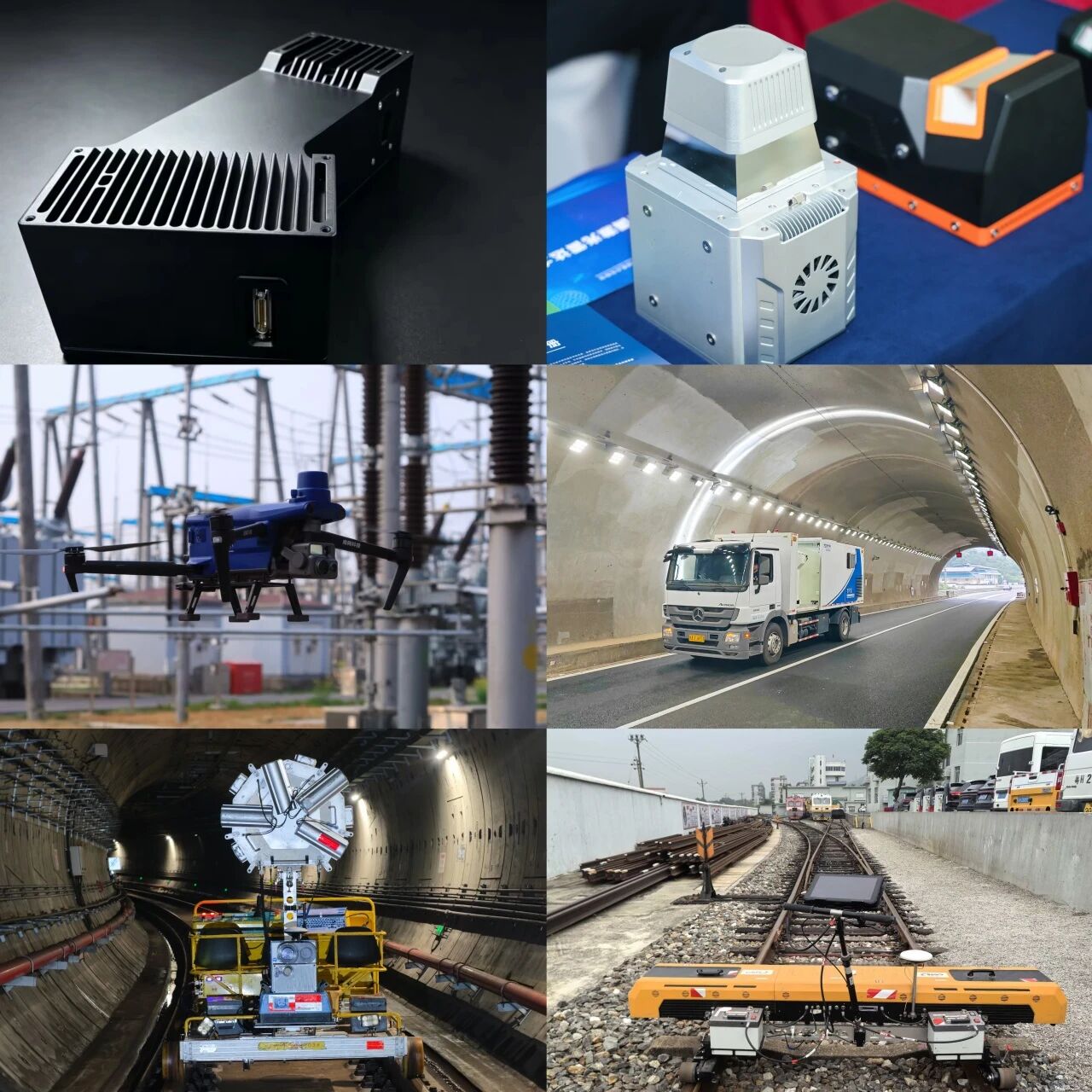
This achievement has established an innovative Chinese solution for intelligent inspection of major infrastructure, which has been widely applied in the inspection of China's power grid, high-speed rail, tunnels, and other major infrastructure, and has also been exported overseas. It has achieved significant economic and social benefits, effectively promoting the development of precision measurement and the upgrading of inspection technology and equipment, leading the infrastructure operation and maintenance to make a leap from "manual carpet-style rough inspection to intelligent guided precision measurement".
The National Science and Technology Award, established by the State Council, is China's highest-level science and technology award system. It is reviewed every two years and comprises five major categories: the State Supreme Science and Technology Award, the State Natural Science Award, the State Technological Innovation Award, the State Science and Technology Progress Award, and the International Science and Technology Cooperation Award of the People's Republic of China. Among them, the State Natural Science Award, the State Technological Innovation Award, and the State Science and Technology Progress Award are collectively referred to as the "Three Major Awards" in the industry, with a total number of award-winning projects not exceeding 300 per session.
The National Science and Technology Awards adhere to national strategic orientation and the "Four Faces" principle, closely aligning with major national strategic needs and medium- and long-term science and technology development plans. They primarily reward scientists and frontline scientific and technological personnel who have made creative contributions to basic research and applied basic research, tackled key core technologies, and helped develop new productive forces.
In 2025, a total of 258 projects and 11 scientific and technological experts were selected for the National Science and Technology Awards. Among them, 2 individuals were awarded the National Highest Science and Technology Award; 51 projects were awarded the State Natural Science Award, including 3 first-class awards and 48 second-class awards; 58 projects were awarded the State Technological Innovation Award, including 3 first-class awards and 55 second-class awards; 149 projects were awarded the National Science and Technology Progress Award, including 3 special-class awards, 13 first-class awards, and 133 second-class awards; and 9 individuals were awarded the International Science and Technology Cooperation Award of the People's Republic of China.

 Eng
>
Research
>
Research Highlights
>
Content
Eng
>
Research
>
Research Highlights
>
Content