On March 5, 2026, a delegation from our institute, led by President Chen Xiangsheng (Academician), Professor Su Dong, and faculty members Xu Tao and Shen Xiang, traveled to Hangzhou to attend the seminar on the China Railway Group’s major special project, “Research and Application of New Technologies for High-Precision, Low-Disturbance Pushing Construction of Ultra-Large-Cross-Section Prefabricated Tunnels,” as well as the technical solutions seminar for the key challenges of Hangzhou Metro Line 18. The meeting was chaired by Zhao Yu, Chief Engineer of China Railway 10th Bureau Group. Attendees included Zhao Yi, Deputy General Manager of Hangzhou Metro; Zhu Weidong, Party Secretary and Chairman of China Railway 10th Bureau Group; Zhang Yong, Deputy General Manager; Wei Guangzao, Deputy General Manager and Chief Economist; Yang Jihao, Deputy Chief Engineer; as well as relevant experts and technical personnel from Shandong University, Soochow University, Qingdao University of Technology, China Railway Equipment, Anhui Tangxing, and Beijing Urban Construction Design.
Phase 1 of Hangzhou Metro Line 18 is a key route in Hangzhou’s rail transit system. It runs from Yiqiao Station in Xiaoshan in the south to Century Avenue Station in Linping in the north, with a total length of 48.3 kilometers, all of which is underground. There are 19 stations along the line, 15 of which are transfer stations offering connections to multiple lines. Huajiachi Station on Line 18 is located at the intersection of Kaixuan Road and Huachi South Road and serves as a “T”-shaped interchange station connecting Line 18 with Line 15, which is under construction concurrently. Given its central location and the dense residential areas surrounding it, Huajiachi Station employs the “Kaixuan” super-large-section rectangular pipe jacking machine. This equipment is designed to adapt to complex geological and urban environments, minimize disturbance to surrounding strata, and reduce the impact on above-ground structures, underground utilities, and road traffic during construction to the greatest extent possible.
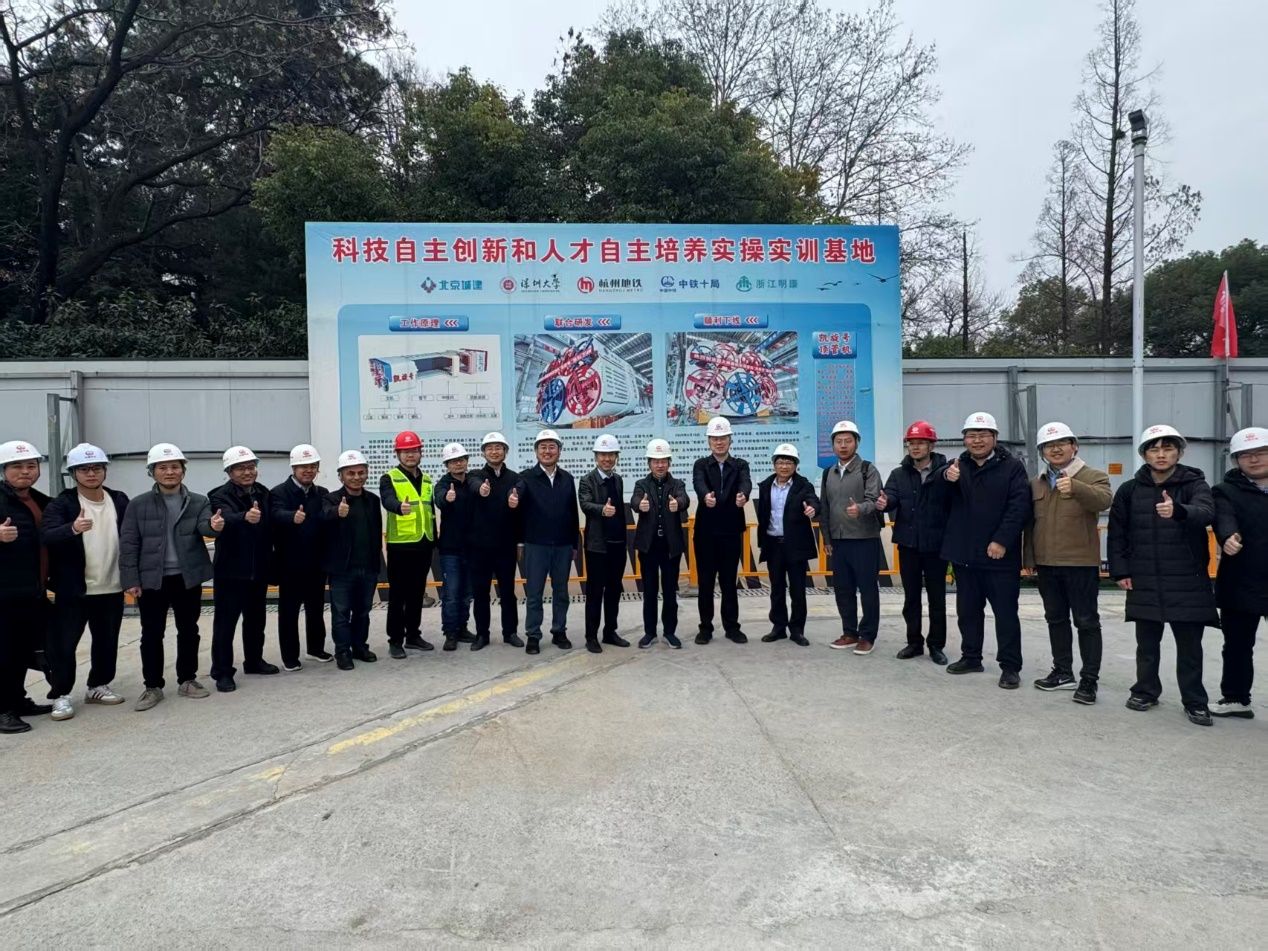
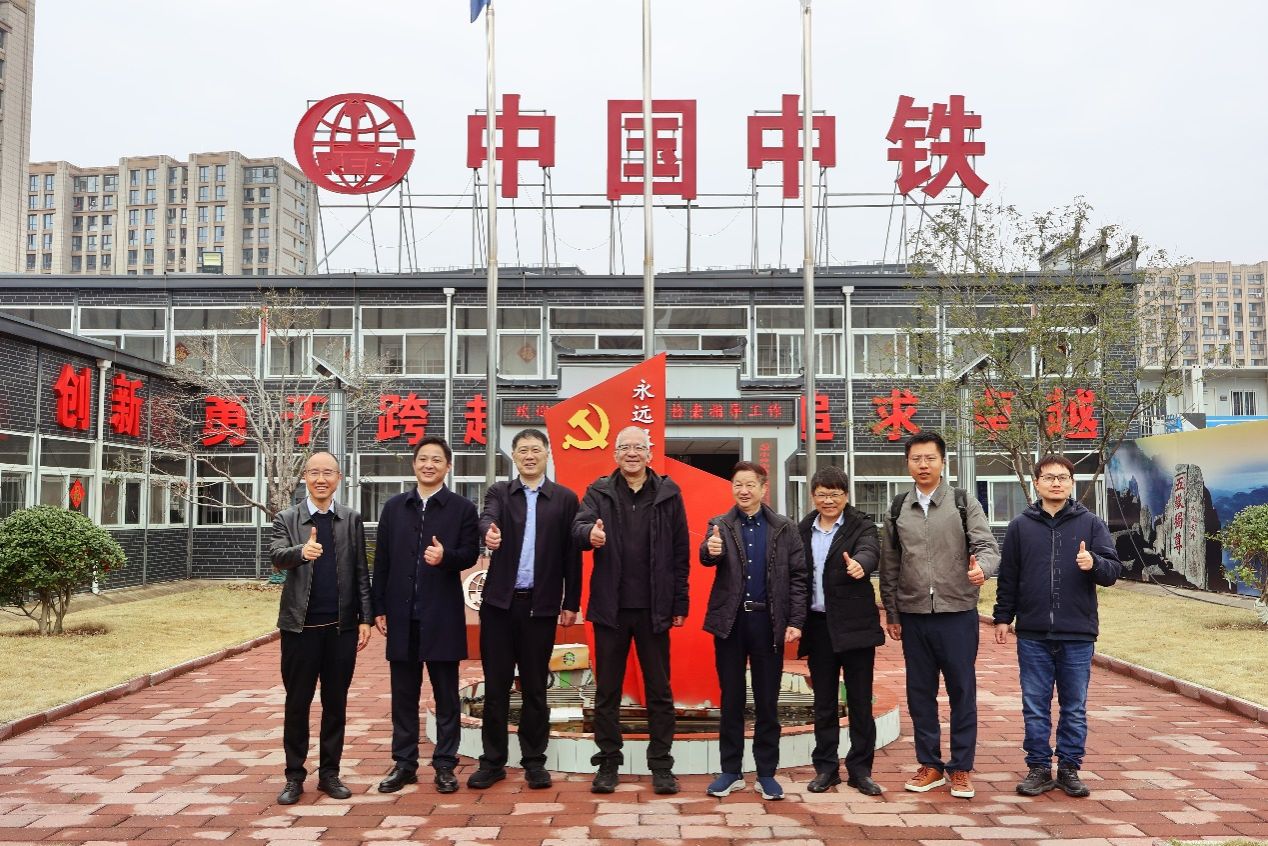
At the seminar, China Railway 10th Bureau Group Urban Rail Transit Company first reported on the progress of the research project and the major technical issues requiring discussion. Subsequently, attending experts and technical representatives discussed technical challenges faced during the construction of Hangzhou Metro Line 18, including deep-burial, high-water-pressure large-diameter pipe jacking, and bundled pipe curtain construction. They addressed safety acceptance risks for Line 18 (handling of reinforced blind zones) and safe jacking risks for Line 15 (high-pressure groundwater), as well as advance grouting and reinforcement in the horizontal and bottom areas during the jacking process of a large rectangular pipe jacking machine equipped with a grouting unit, modification plans for the cutterhead of large-rectangular pipe jacking machines (to reduce blind zones), the feasibility of eliminating intermediate sections, reinforcement methods for the composite pipe curtain area (inverted C-ring reinforcement), soil reinforcement measures between the base slab of the existing line and the top of the composite pipe curtain, soil reinforcement around lattice columns, Technical challenges such as the feasibility of using a small pipe jacking machine to cut lattice columns, robotic obstacle removal, and re-cutting lattice columns during the excavation phase (to minimize soil disturbance), collectively contributing expertise to ensure the project’s smooth implementation and technological innovation. During the visit, Academician Chen Xiangsheng expressed his gratitude to China Railway 10th Bureau Group for establishing a high-level platform for technical exchange and academic discussion, and fully affirmed the positive progress made in advancing major special projects. He noted that the long-span rectangular pipe jacking and bundled pipe curtain project for the Hangzhou Metro, undertaken by China Railway 10th Bureau Group, demonstrates significant exemplary value and cutting-edge exploratory significance in the construction of urban rail transit nationwide. Throughout the construction and technological R&D processes, China Railway 10th Bureau Group has demonstrated solid professional construction capabilities and research and development strengths, particularly in the field of long-span pipe jacking, where it has accumulated valuable practical experience and scientific data. Academician Chen Xiangsheng stated that the Academy will further deepen cooperation with China Railway 10th Bureau, focusing on technical challenges in pipe jacking under conditions of great depth and high water pressure—such as portal sealing, slurry drag reduction, and anti-surge measures for screw jacks—as well as bottlenecks in minimally disruptive control during composite pipe curtain construction, including obstacle clearance efficiency, lattice column removal, near-zero-clearance crossings of existing operational lines. We will continue to conduct technical research, collaboratively advance construction method innovations and patent applications, and strive to develop a series of core technological achievements with independent intellectual property rights that represent the industry’s advanced level, thereby propelling the construction of urban rail transit toward mechanization and intelligentization.
In addition, our college leverages major research projects commissioned by China Railway Group to deepen industry-academia partnerships with companies such as Beijing Urban Construction Design, Hangzhou Metro, and China Railway 10th Bureau Group, jointly establishing practical training bases for independent technological innovation and talent development. Rooted in frontline engineering practice, the base transforms cutting-edge technologies—such as ultra-large-diameter pipe jacking under deep burial and high water pressure, and obstacle clearance for bundled pipe curtains—into vivid teaching case studies. By establishing a distinctive “classroom + laboratory + construction site + employer-integrated teaching and research” model, it promotes the deep integration of scientific research and education. Faculty and student teams conduct construction method innovations and intelligent equipment R&D within real-world engineering scenarios. By employing practical, hands-on teaching methods, the program strengthens students’ ability to solve complex engineering problems, cultivating versatile civil engineering professionals who possess both innovative capabilities and an international perspective, thereby achieving synergy between talent development and industrial innovation.

First Instance: Lu Qiuyue
Second Instance: Su Dong, Xu Tao, Wang Lei
Third Instance: Zuo Yingzi

 旧栏目
>
Eng
>
Research
>
Research Highlights
>
Content
旧栏目
>
Eng
>
Research
>
Research Highlights
>
Content