
 CN
 Search

Full-site Navigation




International

Our College Organized the 2026 Cohort-Based Study Visit to Hong Kong
 Editor: 王幸君
 Release Time: Nov 4, 2026
 Viewed:
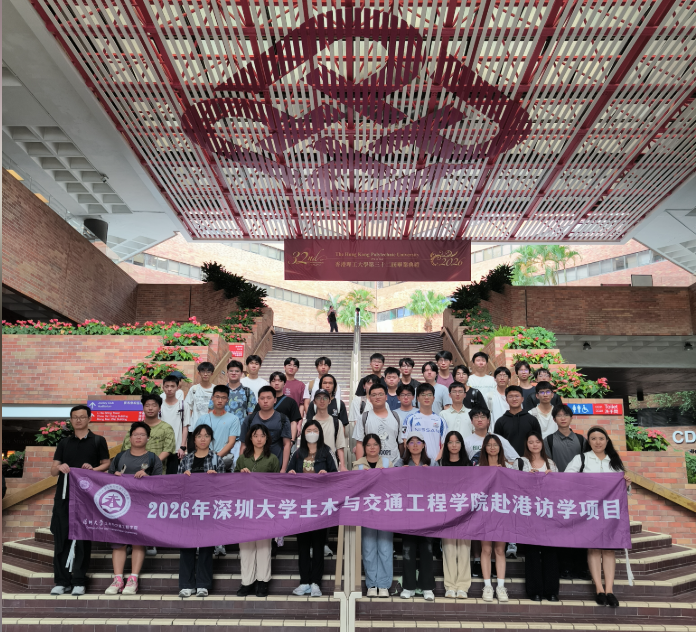
In October 2026, the College of Civil and Transportation Engineering at Shenzhen University organised a two‑day structured study tour to Hong Kong for 42 outstanding undergraduate students. Over the two days, the students visited four top‑tier universities: the University of Hong Kong, the Hong Kong Polytechnic University, the Hong Kong University of Science and Technology, and the City University of Hong Kong. They toured cutting‑edge laboratories, attended academic lectures, and engaged in face‑to‑face discussions with experts and scholars. Discussions centred on frontier fields including intelligent construction, cross‑field applications of GIS and AI, and ground‑penetrating radar, offering brand‑new perspectives for their further academic study and career planning.
The University of Hong Kong: Laboratory Exploration and Postgraduate Admission Sharing at a Time‑Honoured Institution
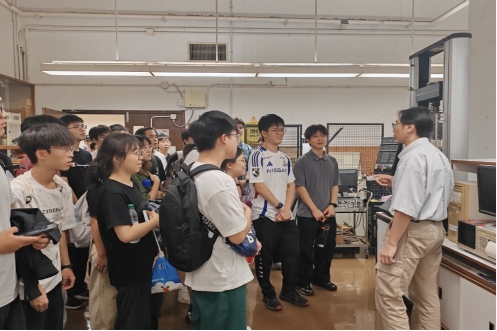
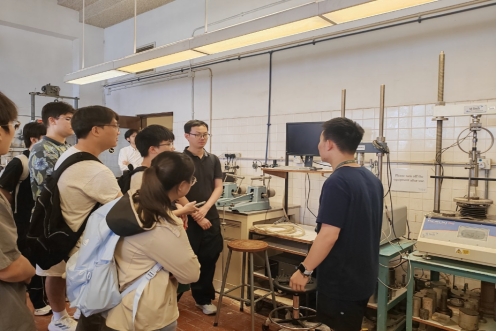
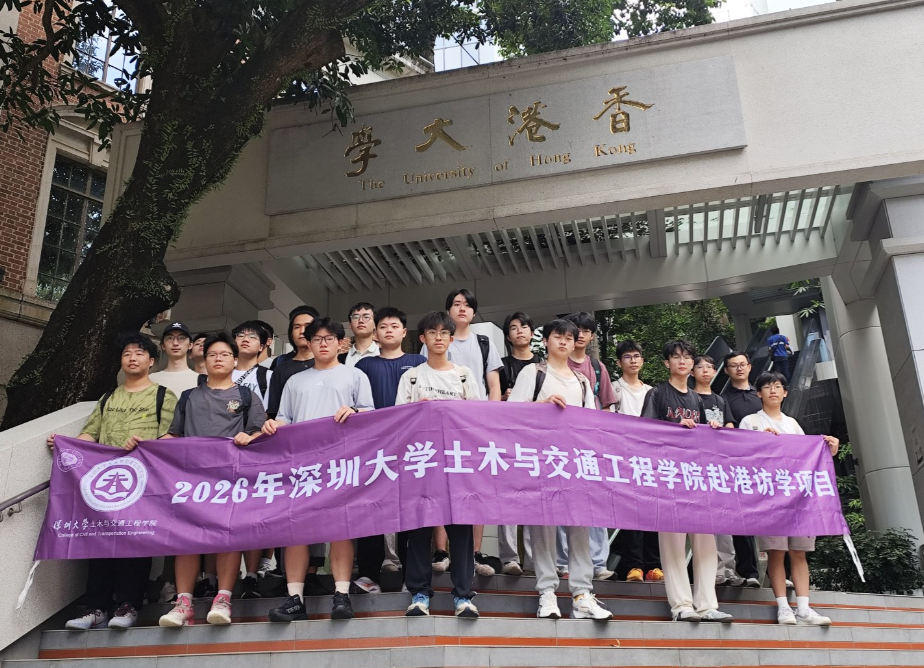
The tour kicked off at the century‑old University of Hong Kong. Guided by faculty members from the Faculty of Engineering, students visited three laboratories within the Department of Civil Engineering.
At the Mechanics Laboratory, Dr. Michael Chan introduced facility configurations and testing approaches for mechanical properties of materials. At the Environmental Engineering Laboratory, Mr. S.L. Fan presented research on water quality treatment, solid‑waste resource utilisation, and air pollution control. In the Peter Lam Soil Mechanics Laboratory, Dr. Zhu led an on‑site demonstration of geotechnical testing equipment and experiments for measuring soil mechanical performance.
Following the laboratory visits, Dr. Zeng from the Department of Civil Engineering delivered a special sharing session on postgraduate study opportunities in Hong Kong. His presentation covered research group profiles, pathways for mainland students applying for master’s and doctoral programmes in Hong Kong, tips on contacting supervisors, and practical advice on housing and daily life in Hong Kong. He highlighted the differences in training objectives and application requirements between one‑year taught master’s programmes and two‑year research‑oriented master’s programmes, as well as application pathways and scholarship policies for 3‑year and 4‑year PhD tracks. Dr. Zeng emphasised that in the AI era, core competitiveness for further study lies in the capacity to propose research ideas and evaluate their rationality, and encouraged students to develop independent critical‑thinking skills.
The Hong Kong Polytechnic University: Frontier Lecture on the Intersection of GIS and Artificial Intelligence
At the Hong Kong Polytechnic University, Professor Guo delivered a special academic lecture entitled Spatiotemporal Assessment of Building Photovoltaic Potential Based on Geographic Information Systems and Artificial Intelligence.
Starting from the research background of building photovoltaics, Professor Guo illustrated how GIS technology can be used to acquire urban building datasets, combined with AI algorithms to realise precise spatiotemporal assessment of rooftop photovoltaic potential. Bridging geographic information science, artificial intelligence and renewable‑energy research, the lecture demonstrated promising prospects for interdisciplinary innovation within civil engineering. During breaks, students actively exchanged views with the professor regarding data sources, algorithm accuracy and practical engineering implementation.
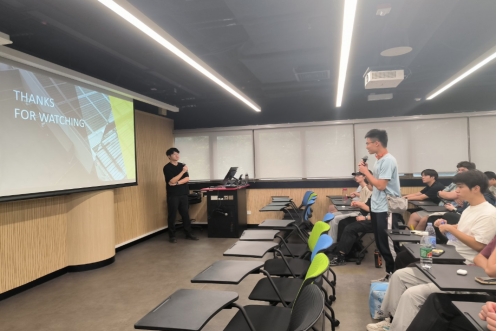
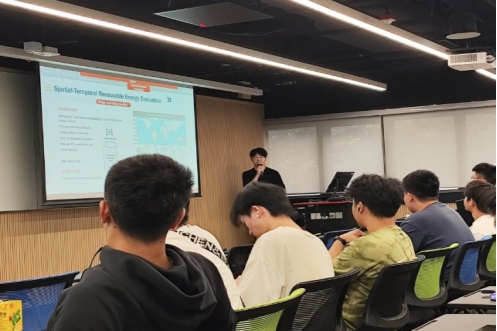
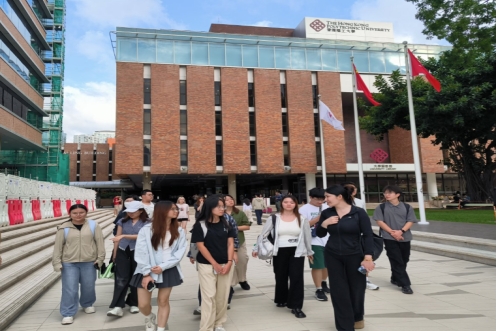
After the lecture, PhD alumni from Shenzhen University currently studying at PolyU led the group on a campus tour. Students gained deeper insights into the campus environment and academic culture of this prestigious engineering‑focused university.
The Hong Kong University of Science and Technology: Building GPT — Intelligent Dialogue with Building Data
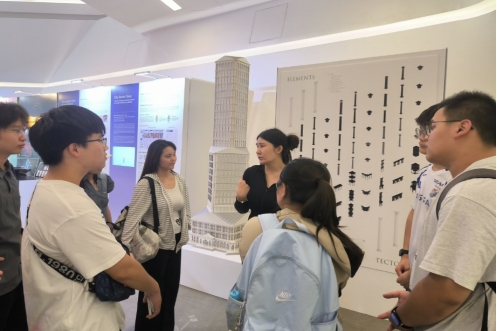
The third stop of the study tour was the Hong Kong University of Science and Technology, nestled by Clear Water Bay. Besides its scenic coastal campus, students gained rewarding insights from an academic lecture. Professor Wang, Associate Director of the Smart City Institute and Director of the Intelligent Construction and Building Laboratory within the Department of Civil and Environmental Engineering, presented his lecture Building GPT: Talk with your building data.
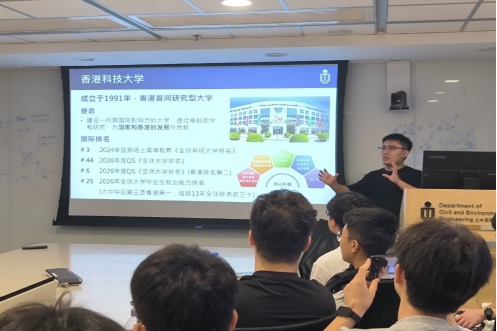
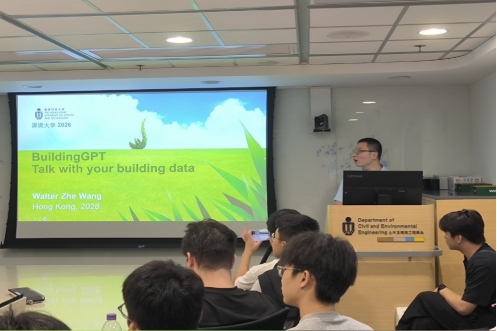
The session explored the integration of large‑language models and building data, investigating how GPT‑enabled technologies enable intelligent interaction and analysis of building data — empowering buildings to “speak for themselves”. From energy‑consumption analysis and facility operation‑maintenance to space utilisation and safety management, large‑scale AI models are reshaping how data is leveraged across the construction industry. After the lecture, students held in‑depth exchanges with Professor Wang on technical pathways, real‑world application scenarios and career‑development options.
City University of Hong Kong: Ground‑Penetrating Radar — the “X‑ray Vision” for Underground Surveys
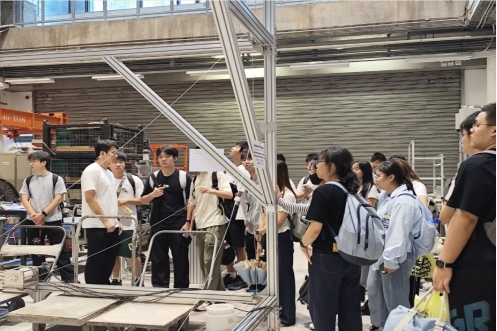
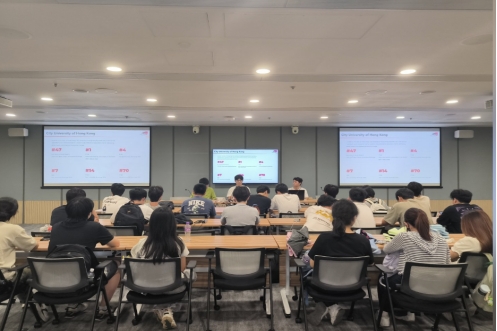
The final destination was City University of Hong Kong. Led by Professor Lu’s research group, the delegation toured the heavy‑duty structural testing laboratory closely linked to civil engineering and held in‑depth conversations with local researchers. Group members introduced the university overview, research directions and faculty profiles of the Department of Civil Engineering, alongside explanations of postgraduate application procedures and scholarship schemes.
In the research‑sharing session, Dr. Dai presented his report CT for Roads: How Ground‑Penetrating Radar Delivers “X‑ray Vision” for Underground Exploration. Drawing the vivid analogy of performing CT scans on road infrastructure, he illustrated the working principles, data‑processing workflows and engineering applications of ground‑penetrating radar in road‑defect detection, underground‑pipeline location and geological investigation. Ranging from electromagnetic‑wave propagation and imaging algorithms to engineering inspection and smart‑city deployment, the talk furnished students with fresh understanding of cutting‑edge detection technologies for civil and transportation engineering.


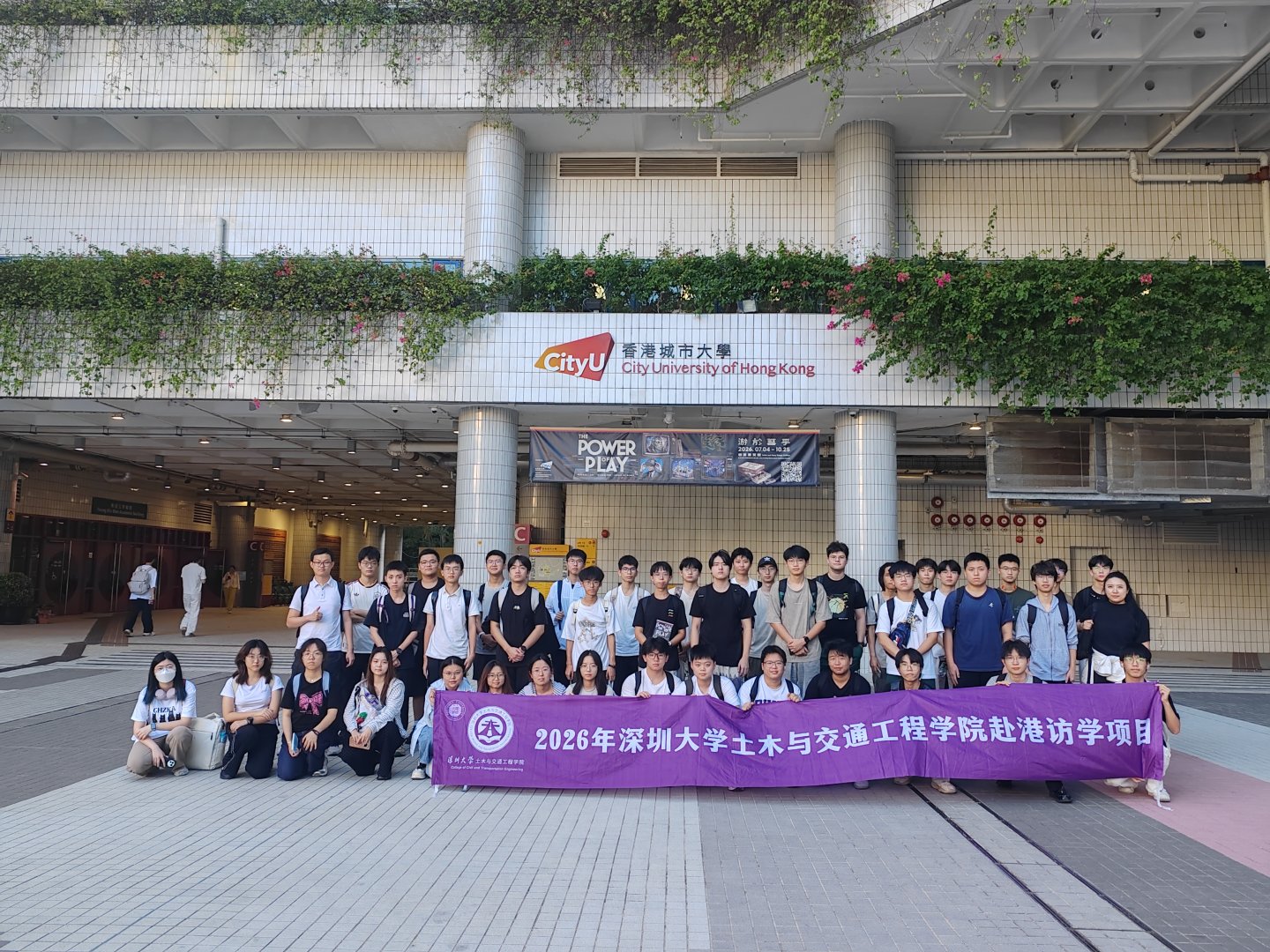
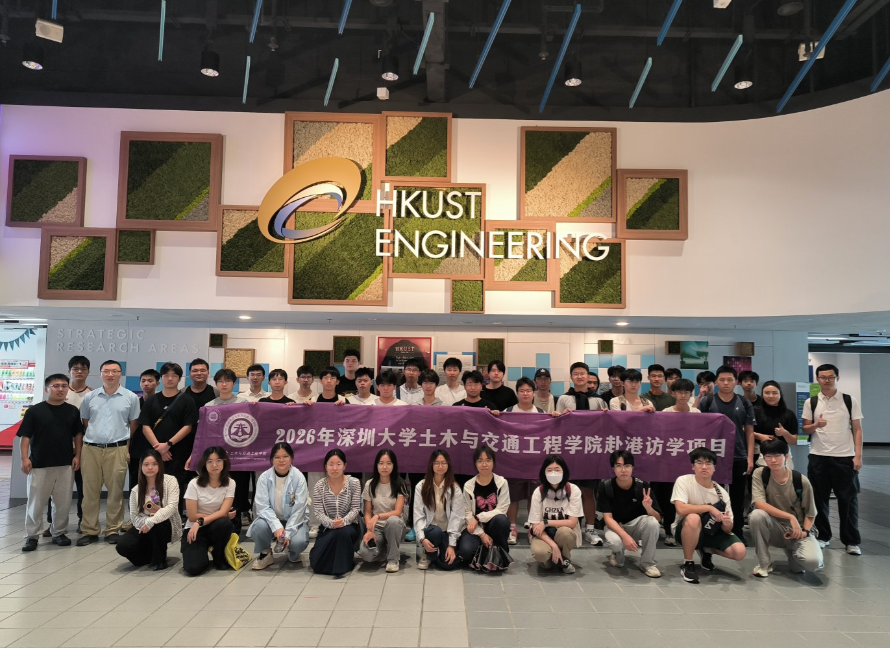
The two‑day, four‑university itinerary was intensive yet fulfilling. From hands‑on laboratory investigations at HKU and cross‑discipline lectures at PolyU, to forward‑looking discussions on Building GPT at HKUST and underground‑detection technology at CityU, every stop opened new intellectual horizons for participating students.
Moving forward, the College of Civil and Transportation Engineering at Shenzhen University will continue to expand international exchange opportunities, nurturing innovative civil‑engineering talents equipped with global competitiveness. It is hoped that participants will build upon this study‑tour experience and forge ahead resolutely along their academic journeys.
 Back to Top