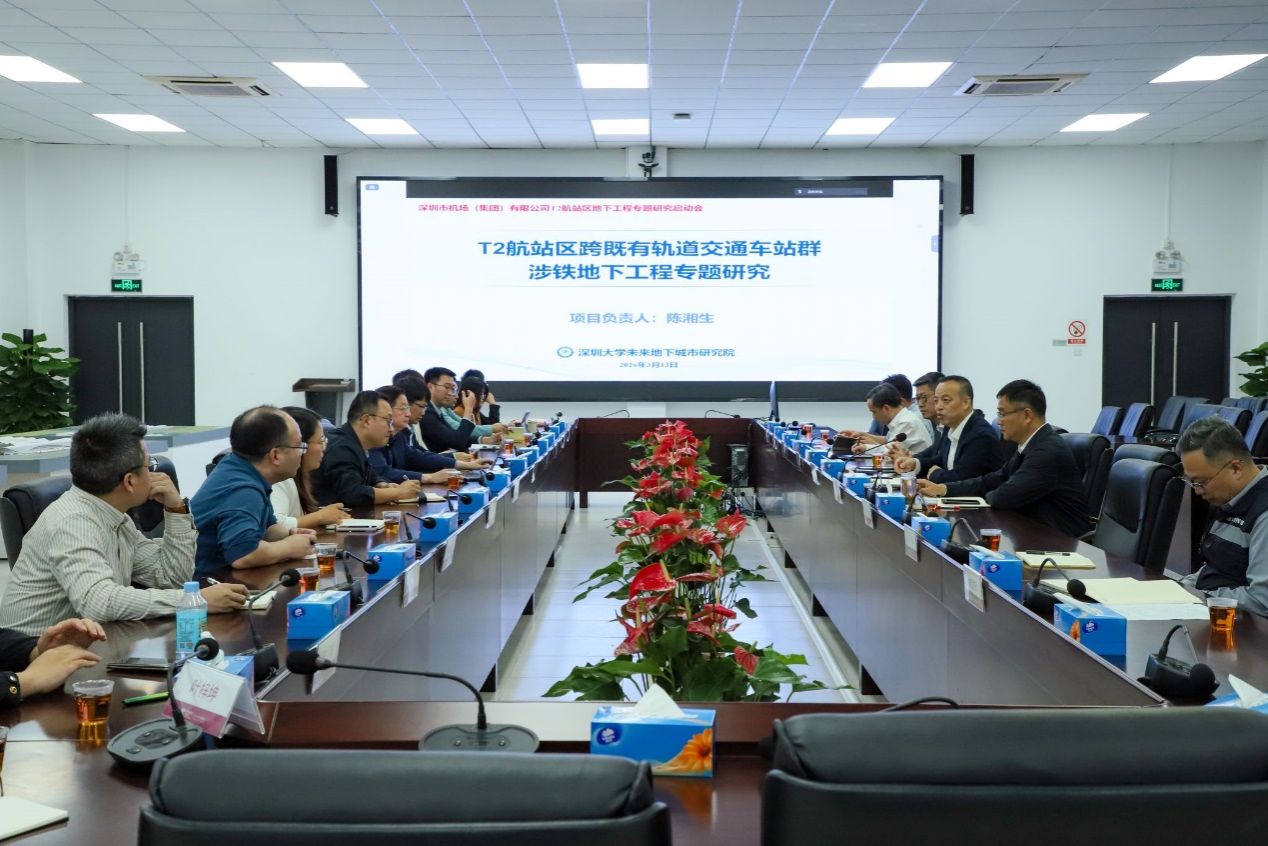
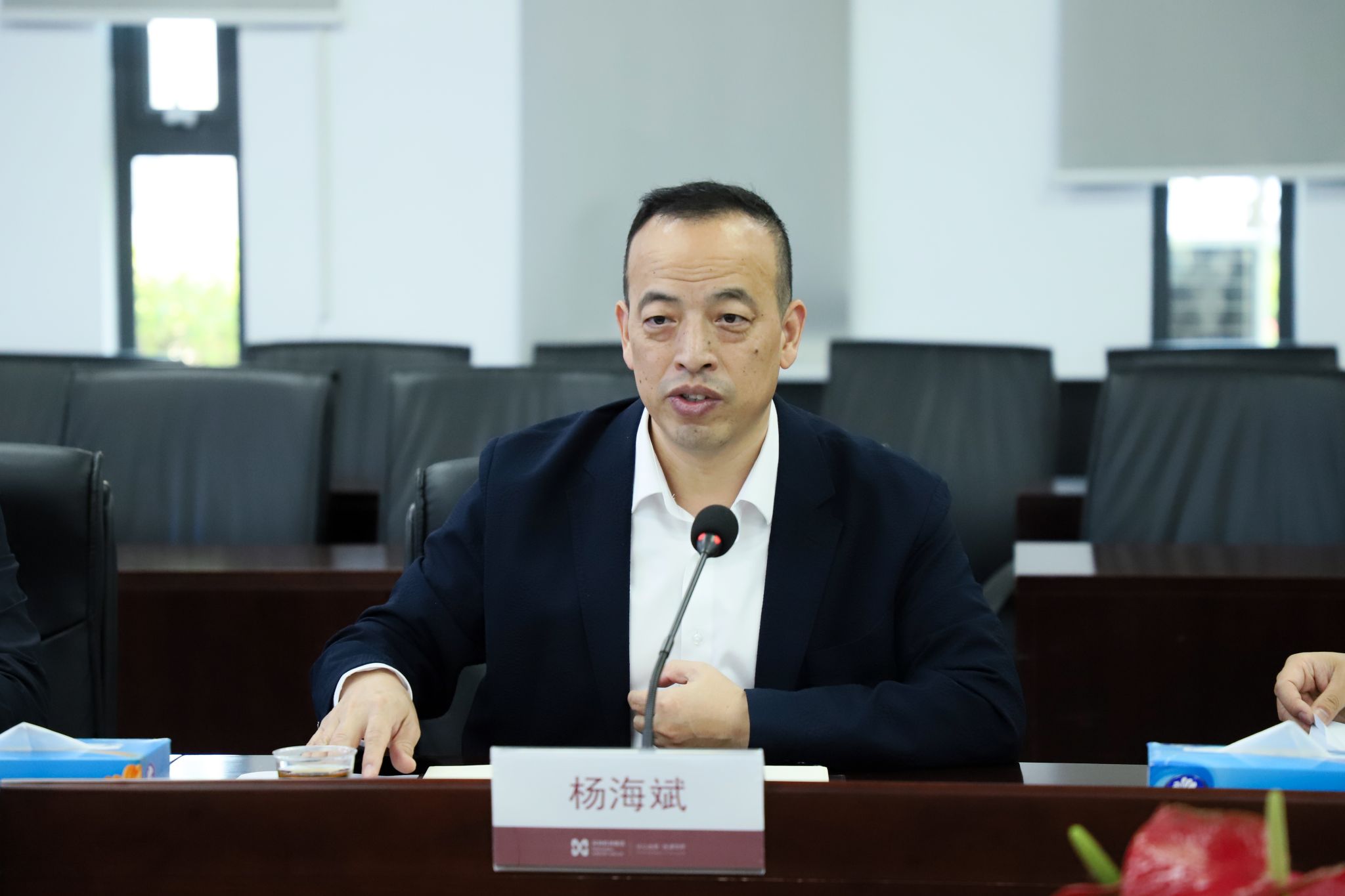
On March 13, 2026, Academician Chen Xiangsheng, President of our institute, led a team to the Shenzhen Bao’an International Airport Construction Project Command Headquarters to hold the kick-off meeting for the project titled “Specialized Study on Underground Engineering Involving Railways in the T2 Terminal Area Crossing Existing Rail Transit Stations.” The meeting was chaired by Yang Haibin, Deputy General Manager of Shenzhen Airport Group and Commander of the Airport Construction Project Command Headquarters. Attendees included Zhu Fanghai, Executive Deputy Commander; Hao Hangcheng, Deputy Commander; Liu Mingqiu, Deputy Chief Engineer; Chen Ke, Quality Director; Chen Gang, Director of the Design and Technology Department; Ban Xiaolin, Deputy Director of the Design and Technology Department; Yao Yuandong, Deputy Director of the Construction Project Command Headquarters; Wang Xuetao, Deputy Director of the Construction Project Command Headquarters; and relevant staff members. Professor Su Dong, Deputy Dean of the Future Underground City Research Institute at the School of Civil and Transportation Engineering; Senior Lecturer Li Dong; Professor Lü Haimin; Professor Xu Tao; Director Chen Xi; and relevant faculty members also attended the meeting.
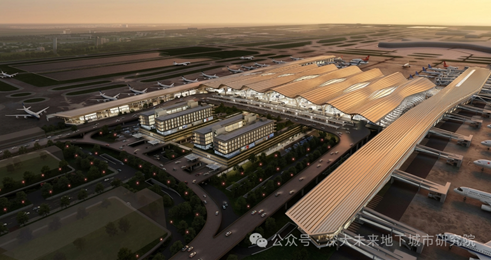
The Terminal 2 area at Shenzhen Bao'an International Airport represents a new model of integrated transportation hubs, being the world’s first to achieve a “highly integrated fusion” of the GTC, the terminal building, landscaped gardens, and urban neighborhoods. The Bao’an International Airport Terminal 2 complex and its supporting infrastructure feature a large scale, deep pile foundations, and numerous excavation pits. Directly beneath the site lies a “cluster of rail transit stations” comprising the operational Line 11, Line 20, and the Guangzhou-Dongguan-Shenzhen Intercity Railway, as well as the under-construction Shenzhen-Dongguan Intercity Railway. Consequently, the structural system is extremely complex, safety control standards are stringent, and the project presents significant challenges in terms of construction coordination and operational coordination. Throughout the project’s implementation, the Future Underground City Research Institute at Shenzhen University will serve as a consulting firm. Aligning with the client’s requirements, the team will provide systematic, full-process technical consulting and decision-support services focused on key aspects such as design optimization, construction safety, and quality control.
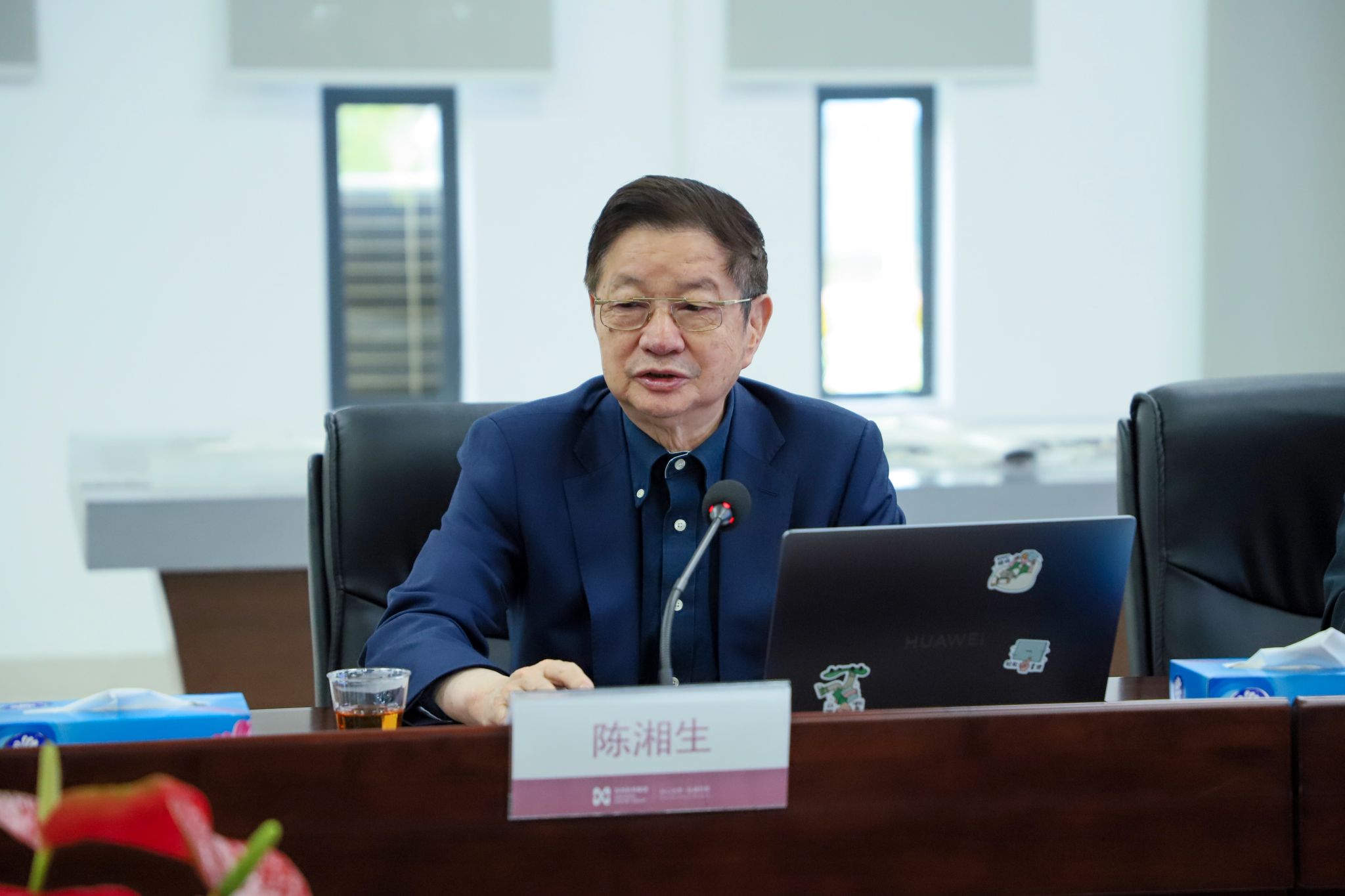
At the kick-off meeting, Academician Chen Xiangsheng delivered a presentation covering three key areas: the project background and research significance, the service plan for the thematic studies, and the management guidelines for the thematic research. He provided a detailed explanation of the scope, core content, and implementation plans for the four thematic studies, outlined the overall timeline and interim deliverables, and offered a comprehensive explanation of the organizational structure and management procedures for the thematic research.
During the discussion session, both parties engaged in in-depth exchanges and discussions on key issues such as the division of responsibilities among the project commissioning entities, challenges in implementing pile foundation work, and measures to ensure drainage during the flood season. The meeting further clarified the scope of responsibilities and coordination mechanisms among all participating construction units. It addressed potential challenges during pile foundation construction, including complex geological conditions, construction organization, and quality and safety control. Additionally, the meeting emphasized the need to expedite the implementation of measures for excavation drainage, flood prevention, and construction safety during periods of heavy rainfall, thereby providing directional guidance for the next phase of project advancement and safety management.
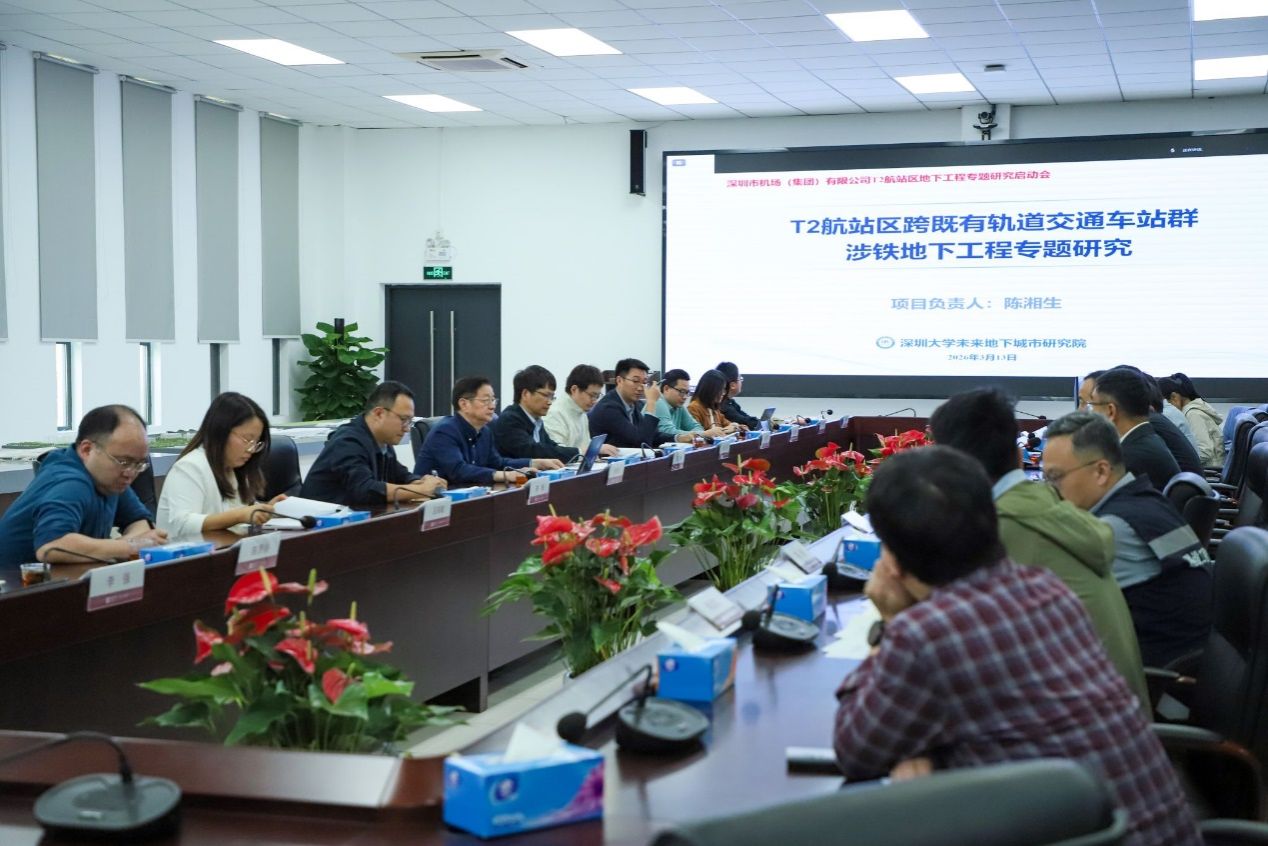
In his remarks, Academician Chen Xiangsheng put forward four recommendations: First, the team at the Institute of Underground Cities will promptly organize an internal meeting to refine the division of tasks. He also suggested that the airport authorities contact all relevant units to convene a coordination meeting to ensure the establishment of a comprehensive working liaison mechanism; Second, he requested that the Airport Construction Project Command provide a list of construction contractors, so that both parties can jointly contact the relevant units to collaboratively advance the review of existing tunnel protection measures; Third, he recommended convening a panel of leading national experts to conduct a specialized seminar on the challenges of pile foundation engineering, documenting the proceedings in meeting minutes and fully incorporating expert recommendations to provide technical support for subsequent construction; fourth, he emphasized the need to establish a reverse-scheduling plan based on the airport’s overall construction timeline, seizing every opportunity to accelerate progress and ensure the project is completed on time and to a high standard.
Deputy General Manager Yang Haibin highly commended the technical capabilities and expertise demonstrated by the team of academicians at the Future Underground City Research Institute in the field of underground engineering. He noted that their research and consulting work will significantly advance the digital and intelligent transformation of underground construction in the T2 Terminal Area. He expressed his hope that both parties will continue to deepen their practical cooperation, strengthen coordination and collaboration, and jointly ensure the safe, high-quality implementation and timely completion of the T2 Terminal Area project.
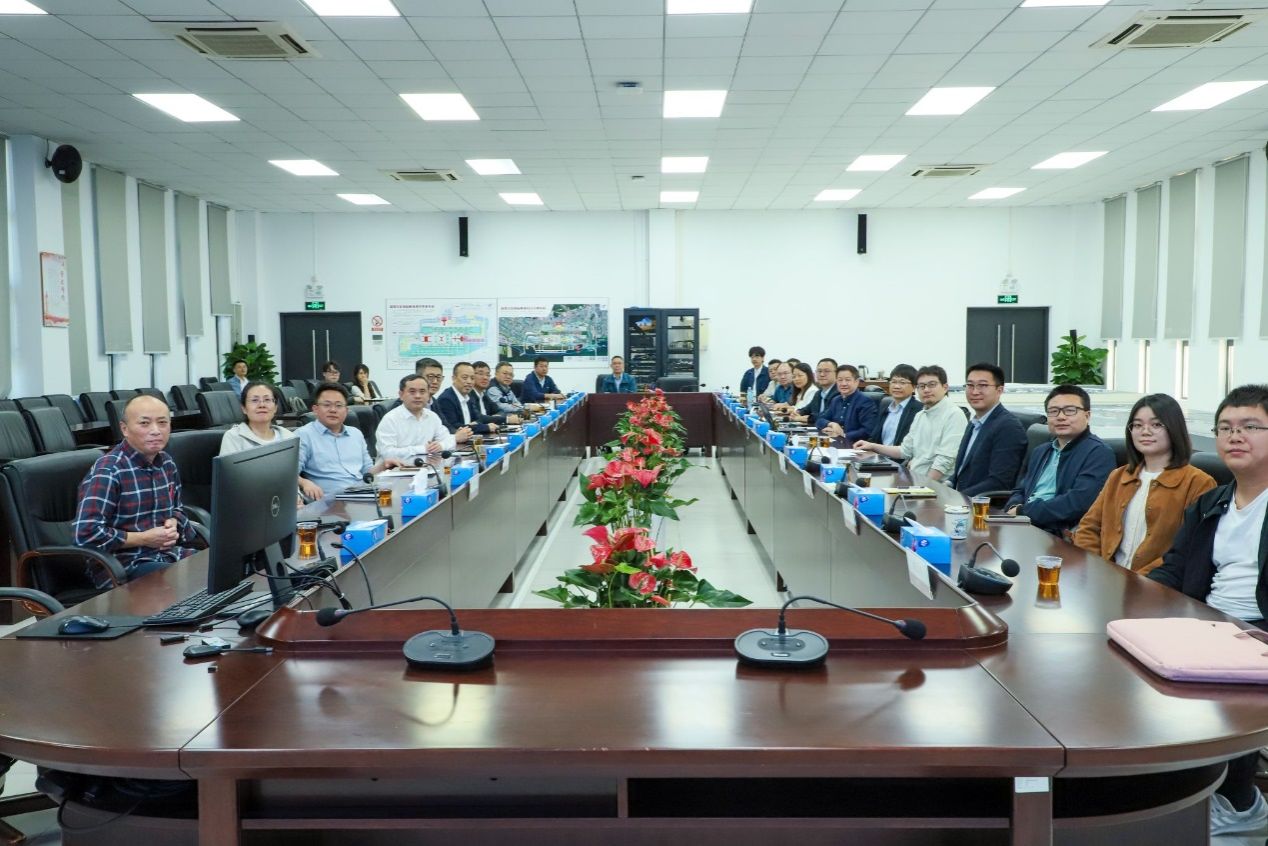
The project titled “Specialized Study on Underground Railway-Related Engineering in the T2 Terminal Area Crossing Existing Rail Transit Stations” will further enhance our institute’s capabilities in collaborative innovation across industry, academia, research, and application, as well as our level of engineering services. It will fully demonstrate the sense of responsibility and historical mission of universities in the Guangdong-Hong Kong-Macao Greater Bay Area in serving the nation’s major strategies and major engineering projects.
By: Ye Zikun and Wang Jiawei
First Review: Lu Qiuyue
Second Review: Su Dong
Final Review: Zuo Yingzi


 旧栏目
>
旧栏目
>