
 CN
 Search

Full-site Navigation




Research

Team
Deep Earth Science and Green Energy
Team Basic Information
-
 Team NameDeep Earth Science and Green Energy Research Team
-
 Affiliated CollegeCollege of Civil and Transportation Engineering, Shenzhen University
-
 Year Established2018

Team Overview
Research Directions and Features
Main Research Directions
- Direction 1:Rock dynamics (and statics) for the deep earth, deep sea, and deep space
- Direction 2:Fidelity coring and prospecting for the deep earth, deep sea (gas hydrates), and deep space
- Direction 3:Theories and technologies for geothermal exploration, exploitation, and power generation
- Direction 4:Low-carbon technologies and direct hydrogen production from seawater
Landmark Technologies / Theories
1.A novel principle and technology for in-situ hydrogen production from seawater without desalination
The team pioneered a brand-new principle and technology for in-situ direct electrolysis of seawater for hydrogen production, established a theoretical method for direct seawater electrolysis based on the self-migration and self-drive of gas–liquid interfacial phase change, and constructed physico-mechanical–electrochemical theoretical equations and technical models.
It thereby achieved dynamically self-regulated, stable direct seawater electrolysis in which the electrochemical reaction proceeds in coordination with seawater migration without additional energy consumption. This achievement was published in Nature and selected as one of the “Top 10 Science Advances of China in 2022.” The team further proposed a new pathway and technology for direct seawater hydrogen production that withstands the uncontrollable wave environment of the real ocean, developed a fully decoupled direct seawater electrolysis strategy, and built a floating offshore hydrogen production platform together with a smart and stable power supply system for offshore wind power. With these advances, it achieved long-duration, stable, low-energy hydrogen production at industrial-grade current density for over 250 hours, accomplished the world’s first successful sea trial of direct seawater electrolysis for hydrogen production driven by offshore wind power without desalination, and delivered the world’s first demonstration project of offshore-wind-powered direct hydrogen production from seawater.
2.In-situ fidelity coring and fidelity testing/analysis systems for deep rocks
The team first proposed the concept of in-situ self-triggered pressure-preserved coring, together with a novel principle of pressure- and temperature-preserved coring that combines “active + passive” thermal insulation. It originally put forward the disruptive principle and technology of “quality-, moisture-, and light-preserved” coring and “film-forming while drilling,” overcoming the challenge of in-situ film formation while drilling at depth and filling the technical gap in deep in-situ coring with quality, moisture, and light preservation. It independently developed the world’s first 1:1 full-scale deep in-situ “five-preservation” coring calibration and simulation analysis platform, filling the technical gap in the simulated testing and calibration of physical and mechanical parameters under in-situ environments at various depths. It innovatively proposed temperature–pressure interpolation decoupling control technology, breaking through the coupled temperature–pressure control challenge and filling the technical gap in the reconstruction of deep in-situ environments and fidelity-transfer docking. It further pioneered non-contact testing technologies and methods for acoustic and electromagnetic signals of rock cores in reconstructed deep in-situ fidelity environments, realizing non-contact measurement of the physical properties of fidelity-preserved cores. It also pioneered a system for preparing fidelity-preserved rock samples and conducting fidelity loading tests under reconstructed deep in-situ environments, enabling fidelity loading test analysis of preserved cores and providing a brand-new fundamental experimental platform for deep in-situ rock mechanics research. This equipment was officially released to the world in December 2024.
3.A dynamic true-triaxial electromagnetic Hopkinson bar testing system
The team proposed the main control methods and technology for the dynamic true-triaxial electromagnetic Hopkinson bar, and developed tri-axial six-direction Hopkinson bars with specimen positioning and centering control, three-dimensional centering and leveling with the pulse gun, and supporting devices for 3D alignment control of the waveguide bars. These advances achieved high-precision, rapid three-dimensional centering and leveling control among the tri-axial six-direction Hopkinson waveguide bars, the specimen, and the pulse gun. The team was the first to complete tri-axial six-direction dynamic loading tests and multi-axial, multi-directional coupled static–dynamic loading tests, filling a gap both at home and abroad. It pioneered the tri-axial six-direction electromagnetic stress pulse loading method, technology, and apparatus, and created the tri-axial six-direction electromagnetic stress pulse generator, solving the worldwide problems of large arrival-time errors and low waveform repeatability in stress-wave loading and achieving adjustability, controllability, and repeatability of tri-axial six-direction electromagnetic stress pulses. It also pioneered tri-axial six-direction coupled static–dynamic loading methods, technologies, and equipment, breaking through the technical bottleneck of high-precision coupling between the true-triaxial static loading system and the tri-axial six-direction dynamic loading system, and realizing multi-axial, multi-directional coupled static–dynamic loading of static confining pressure and electromagnetic stress pulses. This equipment fills the international gap in three-dimensional rock dynamics testing methods and has received high praise from renowned experts and scholars at home and abroad.
Keywords
Deep earth, deep sea, deep space, green energy, low carbon
Team Positioning
 Basic rese
- Applied de
 Industry–
- Others
Supporting Disciplines
- Pillar discipline:Civil Engineering
- Related disciplines:Mathematics, Mechanics, Chemistry, Mining Engineering, Energy Engineering
Research Facilities and Resources
Supporting Platforms
- State Key Laboratory of Intelligent Construction and Healthy Operation and Maintenance for Deep Earth Engineering
- Guangdong Provincial Key Laboratory of Deep Earth Science and Geothermal Energy Development and Utilization
- Shenzhen Laboratory of Deep Engineering Science and Green Energy
Core Equipment
No. | Equipment | Model |
1 | Benchtop scanning electron microscope | PHENOM PRO |
2 | Deep in-situ five-preservation coring system temperature–pressure coupled testing platform | Custom |
3 | Modular waste-heat power generation unit | ORC-MTG115H |
4 | 3D laser ceramic printe | CSL150A |
5 | Surface morphology scanning microscope | ST400 |
6 | 32-channel high-speed data acquisition system | Genesis |
7 | X-ray 3D non-destructive testing instrument | xs|300d |
8 | Image reconstruction and visualization analysis software | Datos VG STUDIO MAX 3.4 Thermo Fisher |
9 | Real-time nano-scale rock mechanics flaw detection instrument | X|s 180nf |
10 | 3D printer | J850 Prime |
11 | Focused ion beam scanning microscope system | Scious 2 HiVac |
12 | High-performance server | HPC |
13 | Deep rock micro- and nano-mechanics analyzer | PI89 |
14 | Deep in-situ environment fidelity transfer chamber | Custom |
15 | Integrated drilling and testing system | SZU-ZJXT |
16 | Lunar-based environment simulation system | RZKGD-210 |
17 | High-precision integrated rock mechanics testing system | MTS 815.04 |
18 | Integrated acoustic testing instrument | PCI-2 |
19 | Confocal micro-Raman spectrometer | inVia |
20 | Ultra-high-speed camera | KIRANA05M |
21 | Ultra-high-speed camera | Kirana5M |
22 | High-temperature high-pressure chamber transfer and docking system | Custom |
23 | Deep in-situ temperature–pressure coupled core | JSKJ-QXQ |
24 | High-temperature high-pressure microscopic seepage visualization testing system | Custom |
25 | Rock dynamic shear testing system | TARS-1500 |
26 | Multi-station spark plasma sintering system (with glove box) | csps-6500/200/stx |
27 | Explosion spraying (detonation gun) system | CCDS2000-2G |
28 | Thermoelectric conversion efficiency measuring instrument | PEM-2 |
29 | Fuel cell testing system | NBT-SOFC-5KW |
Collaboration Network
- Renowned partner universities at home and abroad:Harvard University, Stanford University, and Pennsylvania State University (USA); University of Cambridge (UK); Monash University and University of Melbourne (Australia);
- Institutions and enterprises:China Dongfang Electric Corporation (DEC), Guangdong Electric Power Co., Ltd. of State Power Investment Corporation (SPIC), China Energy Investment Corporation (CHN Energy),
Research Projects and Achievements
Flagship Research Projects
Project | Principal Investigator | Project Type | Duration (Years) |
In-situ fidelity coring and fidelity testing and analysis system for deep rocks | Heping Xie | NSFC Major Research Instrument Development Project | 2019-2024 |
Theories and technologies of engineering-disturbed rock dynamics | Heping Xie | Guangdong Pearl River Talent Team Program | 2020-2025 |
Pioneer program for disciplinary breakthrough in green development of marine resources | Heping Xie | Ministry of Education Disciplinary Breakthrough Pioneer Program | 2025-2030 |
Split-module technology and system equipment for direct seawater electrolysis hydrogen production without desalination | Heping Xie | Guangdong Key-Area R&D Program | 2025-2027 |
In-situ 3D rock dynamics testing technology and digital intelligent analysis for deep rocks | Jianbo Zhu | National Science and Technology Major Project (sub-project) | 2025-2028 |
Dynamics of three-dimensional fractured rock masses | Jianbo Zhu | NSFC Science Fund for Distinguished Young Scholars | 2024-2028 |
In-situ rock mass mechanics theory and catastrophe prediction methods for fluidized mining of deep solid resources | Cunbao Li | National Science and Technology Major Project (sub-project) | 2024-2028 |
Multi-scale mechanical behavior of anisotropic deep rocks | Cunbao Li | NSFC Science Fund for Excellent Young Scientists | 2025-2027 |
Theories and technologies of high-efficiency thermovoltaic power generation from hot dry rock geothermal energy | Xiting Long | National Key R&D Program (sub-project) | 2022-2026 |
In-situ electrochemistry of direct coal-fueled solid oxide fuel cells with near-zero carbon emissions in deep formations, and principles and technologies of CO₂ catalytic conversion | Bin Chen | National Science and Technology Major Project (sub-project) | 2025-2029 |
Variation laws and characterization methods of the physico-mechanical properties of high-temperature reservoir rock masses | Minghui Li | NSFC Major Project (sub-project) | 2022-2026 |
Development, industrialization, and promotion of in-situ direct seawater electrolysis hydrogen production technology without desalination | Heping Xie | Industry-funded project | 2022-2032 |
Key technologies for the first megawatt-scale in-situ seawater hydrogen production prototype driven by offshore wind power | Heping Xie | Industry-funded project | 2025-2027 |
Research on precision testing methods and equipment for coal seam gas content | Heping Xie | Industry-funded project | 2022-2023 |
Safe and efficient mining technology for deep mineral resources and occupational health research | Heping Xie | Industry-funded project | 2019-2021 |
Testing of the macro-mechanical properties and seepage laws of Gulong Qingshankou Formation shale under in-situ conditions | Heping Xie | Industry-funded project | 2021-2022 |
Flagship Research Projects
High-Impact Publications
Heping Xie, Zhiyu Zhao, Tao Liu, Yifan Wu, Cheng Lan, Wenchuan Jiang, Liangyu Zhu, Yunpeng Wang, Dongsheng Yang & Zongping Shao. (2022). A membrane-based seawater electrolyser for hydrogen generation. Nature, 612(7941), 673-678.
Shuo Zhai, Heping Xie, Peng Cui, Daqin Guan, Jian Wang, Siyuan Zhao, Bin Chen, Yufei Song, Zongping Shao, Meng Ni. (2022). A combined ionic Lewis acid descriptor and machine-learning approach to prediction of efficient oxygen reduction electrodes for ceramic fuel cells. Nature Energy, 7(9), 866-875.
Tao Liu, Cheng Lan, Min Tang, Mengxin Li, Yitao Xu, Hangrui Yang, Qingyue Deng, Wenchuan Jiang, Zhiyu Zhao, Yifan Wu & Heping Xie. (2024). Redox-mediated decoupled seawater direct splitting for H2 production. Nature Communications, 15(1), 8874.
Tao Liu, Yunpeng Wang, Yifan Wu, Wenchuan Jiang, Yuchao Deng, Qing Li, Cheng Lan, Zhiyu Zhao, Liangyu Zhu, Dongsheng Yang, Timothy Noël, Heping Xie. (2024) . Continuous decoupled redox electrochemical CO2 capture. Nature Communications, 15(1), 10920.
Tao Liu, Zhiyu Zhao, Wenbin Tang, Yi Chen, Cheng Lan, Liangyu Zhu, Wenchuan Jiang, Yifan Wu, Yunpeng Wang, Zezhou Yang, Dongsheng Yang, Qijun Wang, Lunbo Luo, Taisheng Liu & Heping Xie. (2024). In-situ direct seawater electrolysis using floating platform in ocean with uncontrollable wave motion with uncontrollable wave motion. Nature Communications, 15(1), 5305.
Hongxin Yang, Yuan Zhang, Zhipeng Liu, Chunfang Hu, Junbiao Li, Hailong Liao, Minhua Shao, Meng Ni, Bin Chen, Zongping Shao & Heping Xie. (2025). Hydration-induced stiffness enabling robust thermal cycling of high temperature fuel cells cathode. Nature Communications, 16(1), 3154.
Heping Xie, Yunqi Hu, Mingzhong Gao, Ling Chen, Ru Zhang, Tao Liu, et al. Research progress and application of deep in- situ condition preserved coring and testing[J]. International Journal of Mining Science and Technology, 2023, 33(11): 1319-1337.
Heping Xie, Jun Lu, Cunbao Li, Minghui Li, Mingzhong Gao. (2022). Experimental study on the mechanical and failure behaviors of deep rock subjected to true triaxial stress: A review. International Journal of Mining Science and Technology, 32(5), 915- 950.
Jianbo Zhu, Rui Zhao, Yashi Li, Yankun Ma, Jianxin Wang, Qi Peng, Jun Guo. (2023). Experimental study of vibration reduction effect of barrier holes under blasting. Rock Mechanics and Rock Engineering, 56(2), 1185-1198.
Tao Zhou, Dongya Han, Jianbo Zhu. (2023). An experimental study of damage evolution in granite under compression and its influence on wave propagation. Rock Mechanics and Rock Engineering, 56(5), 3413-3427.
Granted Invention Patents
Xie Heping, Li Yulong, Zhu Jianbo, Zhou Tao, Zhao Jian, Suo Tao, Tang Zhongbin. Dynamic true triaxial electromagnetic Hopkinson bar system. US11988645B2.
Xie Heping, Zhu Jianbo, Zhou Tao, Gao Mingzhong, Li Cunbao, Liao Zhiyi, Zhang Kai, Wang Jun. Uniaxial bidirectional synchronous control electromagnetic loaded dynamic shear test system and method. US11913915B2.
Xie Heping, Chen Ling, Gao Mingzhong, Lu Yiqiang, Zhu Jianbo, Li Cunbao. Fidelity coring device. CN109555494B.
Xie Heping, Chen Ling, Gao Mingzhong, Wu Nianhan, Zhu Jianbo, Li Cunbao. Lunar-based in-situ fidelity coring device. CN110186708B.
Xie Heping, Ma Juchang, Zhou Tao, Liao Jiaxi, Li Cunbao. Medium- and low-temperature geothermal ORC magnetic-levitation composite cascade power generation system. CN110131115B.
Representative Awards
No. | Achievement | Award Type | Year |
1 | Energy Analysis Theory of Rock Damage and Catastrophe in Deep Resource Mining | Second Prize, National Natural Science Award | 2026 |
2 | Transparent analysis technology and applications of rock stress fields in deep energy development | First Prize, National Technological Invention Award | 2023 |
3 | Anisotropic rock rupture mechanisms and theories for deep resource mining | First Prize, Natural Science Award of Sichuan Province | 2023 |
4 | Dynamic propagation laws and rupture mechanisms of 3D cracks in fractured rock masses | First Prize, Natural Science Award of the Ministry of Education | 2022 |
5 | Deep coal seam in-situ pressure- and gas-preserved coring principle, technology, and equipment development | Special Prize, Technological Invention Award of the China National Coal Association | 2021 |
Future Development Plans
Short-Term Goals
Conduct a 110 Nm³ H₂/h offshore engineering demonstration of in-situ direct seawater electrolysis hydrogen production without desalination;
Preliminarily establish a new model of deep in-situ rock mechanics and a new theory of engineering-disturbed rock dynamics;
Tackle the development of a 5 kW-class medium- and low-temperature geothermal thermovoltaic power generation test prototype;
Pursue breakthroughs in the principle of large-depth fidelity coring in lunar-based environments.
Mid- and Long-Term Goals
Scale up in-situ direct seawater electrolysis hydrogen production without desalination to 1000 Nm³ H₂/h industrialization;
Establish the theories of deep in-situ rock mechanics and engineering-disturbed rock dynamics;
Develop kilowatt-class deep geothermal in-situ power generation prototype systems;
Develop large-depth fidelity coring devices for lunar-based environments.
Supplementary Materials
Team Signature Achievement Image
-
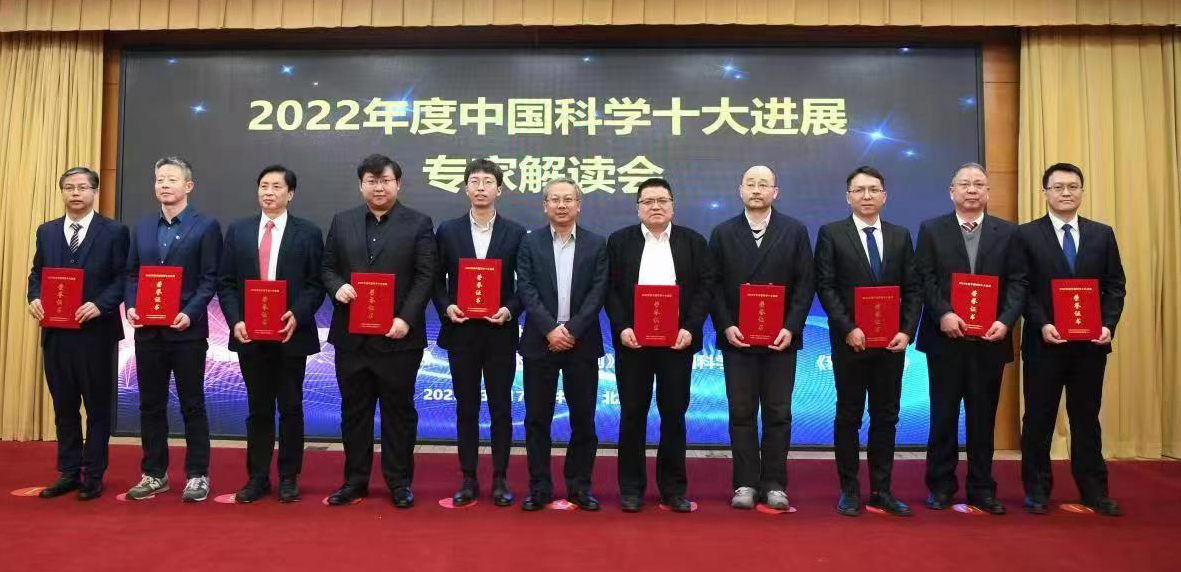
Achieving direct seawater electrolysis for hydrogen production through a completely new principle was selected as one of the "Top 10 Scientific Advances in China in 2022.
-
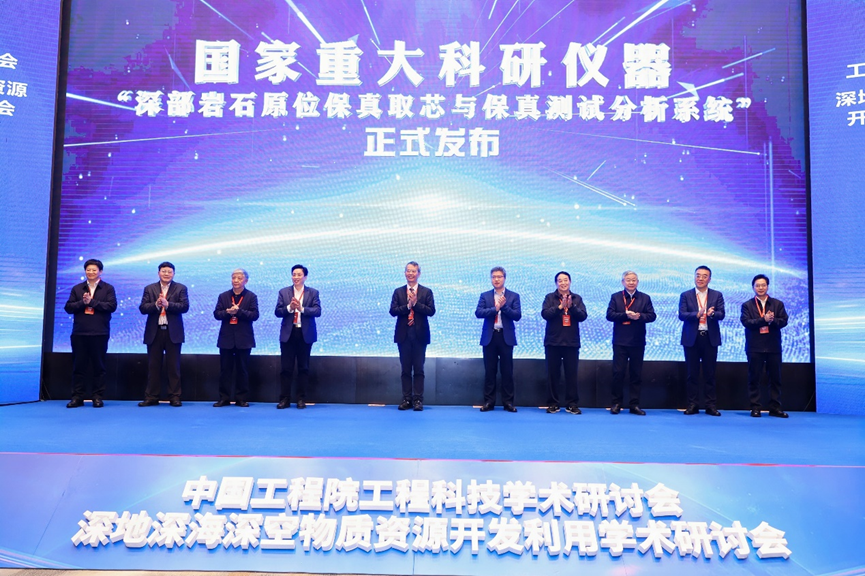
The Deep Rock In-Situ Fidelity Coring and Fidelity Testing and Analysis System was officially released to the world.
-
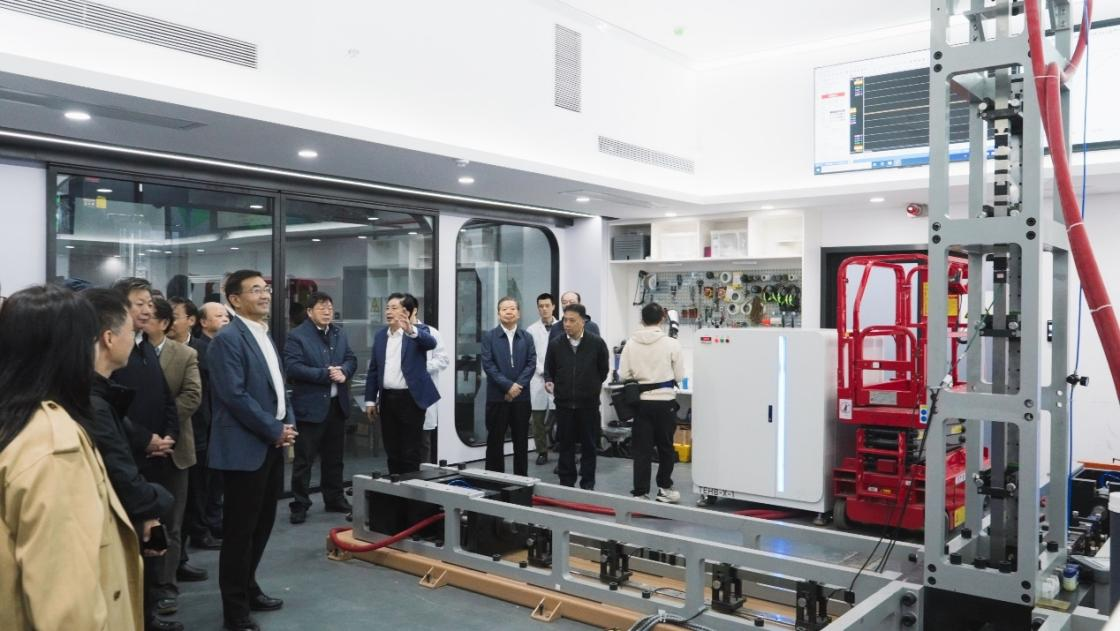
The world's first dynamic true triaxial electromagnetic Hopkinson bar testing system received high praise from experts.
 Back to Top