
 CN
 Search

Full-site Navigation


Research
 Home
>
Research
>
Research Groups
>
Digital and Intelligent Construction and Smart Operation & Maintenance


Research

Team
Digital and Intelligent Construction and Smart Operation & Maintenance
Team Basic Information
-
 Team NameDigital and Intelligent Construction and Smart Operation & Maintenance Research Team
-
 Affiliated CollegeCollege of Civil and Transportation Engineering
-
 Year Established2018

Team Overview
Research Directions and Features
Centering on whole-life-cycle engineering management, the team relies on the State Key Laboratory, the Key Laboratory of the Ministry of Education, and the Sino-Australia Joint Research Center in BIM and Smart Construction at Shenzhen University. Guided by the concept of sustainable development, it takes serving the Guangdong-Hong Kong-Macao Greater Bay Area and the construction of major disciplinary platforms as its purpose, and takes interdisciplinary integration and organized scientific research as its starting point. Aiming to achieve "digitalization, industrialization, intelligentization, and low-carbonization" of the construction industry, the team takes digital and intelligent construction and smart operation & maintenance of urban underground space as its main line, and energy conservation, emission reduction, and resilient city research as its features. Keeping closely abreast of the industry research frontier, it makes full use of technologies such as BIM, artificial intelligence, brain-computer interaction, intelligent equipment, big data, the Internet of Things, GIS, and simulation. Seizing the opportunity of organized scientific research on urban underground space, the team is committed to building itself into a world-class research team for digital and intelligent construction and O&M management.
Main Research Directions
- Direction 1:Digital and intelligent construction and O&M management
- Direction 2:Dual-carbon management and sustainable construction
- Direction 3:Disaster prevention and mitigation for coastal urban buildings and infrastructure
Landmark Technologies / Theories
Keywords
Intelligent construction, building energy conservation, waste management, intelligent construction equipment, disaster preventio
Team Positioning
 Basic rese
- Applicatio
 Industry-a
- Others
Supporting Disciplines
- Pillar discipline:Management Science and Engineering
- Related discipline:Civil Engineering
Team Members
Name | Title / Position | Research Direction | Role in the Team |
Ding Zhikun | Professor / Vice Dean | Sustainable construction, human factors engineering | Academic Leader |
Mo Jinhan | Distinguished Professor | Air safety and energy saving, solar energy utilization | Core Technical Member |
Ding Zhixiong | Distinguished Professor | Building energy conservation, smart O&M | Core Technical Member |
Li Jingru | Professor | Dual-carbon management, disaster prevention and mitigation | Core Technical Member |
Fan Cheng | Professor / Department Head | Building energy conservation, smart O&M | Core Technical Member |
Song Botong | Associate Professor | Engineering project management | Core Technical Member |
Wang Gang | Associate Professor | Engineering project management | Core Technical Member |
Mo Like | Associate Professor | Construction safety management, smart O&M | Core Technical Member |
Jiang Weiping | Associate Professor | Engineering project management | Core Technical Member |
Li Shenghan | Associate Professor | Smart O&M | Core Technical Member |
Wu Zezhou | Associate Professor / Deputy Department Head | Sustainable construction, dual-carbon management | Core Technical Member |
Li Zhengdao | Associate Professor | Intelligent construction, building industrialization | Core Technical Member |
Liao Longhui | Associate Professor / Deputy Department Head | Engineering knowledge management, emergency management | Core Technical Member |
Tan Yi | Associate Professor | Digital and intelligent construction, machine vision | Core Technical Member |
Wu Huanyu | Associate Professor | Sustainable construction, construction robots | Core Technical Member |
Wang Huilong | Associate Professor | Building energy conservation, smart O&M | Core Technical Member |
Yuan Lili | Lecturer | Engineering project management | Core Technical Member |
Wu Lingyi | Laboratory Technician | Sustainable construction, intelligent construction | Core Technical Member |
Cheng Jing | Assistant Professor | Dual-carbon management, smart cities | Core Technical Member |
Ouyang Yewei | Assistant Professor | Intelligent construction, human-robot collaboration | Core Technical Member |
Cao Ruijun | Assistant Professor | Whole-life-cycle low-carbon technology | Core Technical Member |
Amirhossein Karamoozian | Assistant Professor | Engineering risk management | Core Technical Member |
Xie Zhuwei | Assistant Professor | Building energy conservation, smart O&M | Core Technical Member |
Research Facilities and Resources
Supporting Platforms
- State Key Laboratory of Intelligent Construction and Maintenance of Geotechnical and Tunnel Engineering in Extreme Environment
- State Key Laboratory of Subtropical Building and Urban Science
- Key Laboratory of Coastal Urban Resilient Infrastructures (Shenzhen University), Ministry of Education
- Sino-Australia Joint Research Center in BIM and Smart Construction
Core Equipment
No. | Name | Model |
1 | 3D laser scanner | TX8 |
2 | Humanoid robot | G1 EDU |
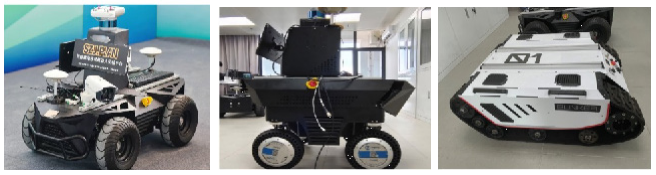
3 | Four-wheel eight-drive omni-directional inspection robot | PL-OM100 |
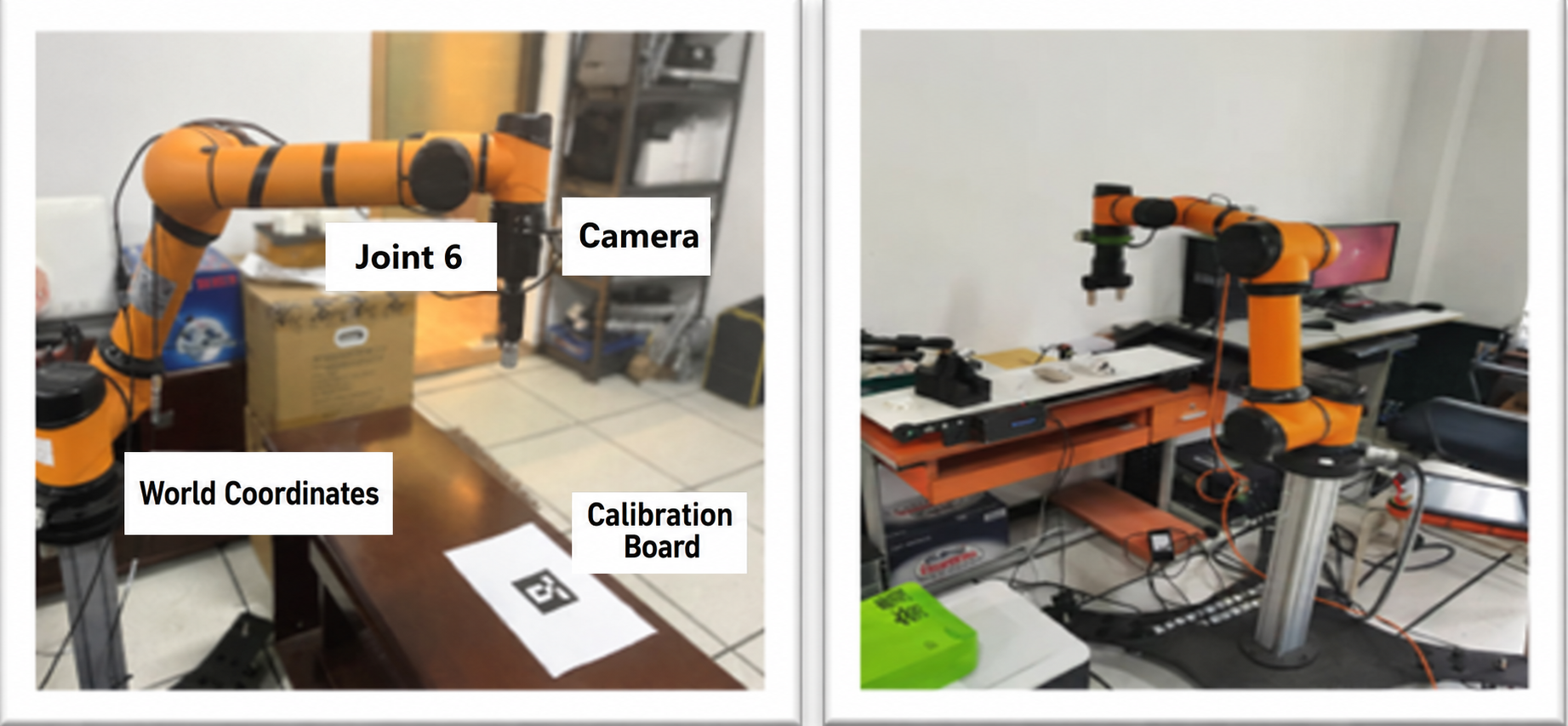
4 | Intelligent visual grasping robot | JCB1.0 |
5 | Autonomous navigation robot for complex and changeable environments | AR-500 |
Collaboration Network
- Joint recruitment and training of doctoral students: Swinburne University of Technology, Australia. International academic coope:Joint recruitment and training of doctoral students: Swinburne University of Technology, Australia. International academic cooperation: University of Adelaide, RMIT University, Western Sydney University, University of Hong Kong, Hong Kong University of Sc
Research Projects and Achievements
Signature Research Projects
Project | Project Leader | Project Type | Duration (Years) |
Indoor Air Purification | Mo Jinhan | National Natural Science Foundation of China Fund for Distinguished Young Scholars | 2024-2028 |
Absorption-Based Thermochemical Energy Storage in Buildings | Ding Zhixiong | National Natural Science Foundation of China Fund for Excellent Young Scholars (Overseas) | 2026-2029 |
Simulation Study on the Recycling Decision-Making Mechanism and Flexible Management Strategy of Stakeholders in Urban Construction Waste: Based on the Perceived Value Cues Perspective | Ding Zhikun | National Natural Science Foundation of China General Program | 2020-2023 |
Intelligent Fault Diagnosis Method for Central Air-Conditioning Systems Integrating Multi-Paradigm Machine Learning under Incomplete Data | Fan Cheng | National Natural Science Foundation of China General Program | 2023-2026 |
Model Construction, Structural Measurement, and Optimization Path Research of a Multi-Collaborative Environmental Governance System under the "Dual-Carbon" Goal Based on Machine Learning | Li Jingru | National Social Science Fund of China General Program | 2022-2026 |
Self-Adaptive Energy-Efficiency Diagnosis Method for Central Air-Conditioning Systems Based on Cross-Building "Data-Model" Collaboration | Fan Cheng | National Natural Science Foundation of China General Program | 2026-2029 |
Integrated Risk Measurement and Resilience Improvement Strategy Research on the Construction Waste Recycling Industry Chain | Wu Zezhou | National Natural Science Foundation of China General Program | 2024-2027 |
Research on BIM-Driven Lean Construction and Integrated Operation Management Mechanism and Key Technologies for Prefabricated Buildings | Li Zhengdao | National Natural Science Foundation of China General Program | 2021-2024 |
Research on a Knowledge- and Data-Driven Emergency Decision Support Mechanism for Emergencies in Urban Underground Space | Liao Longhui | National Social Science Fund of China General Program | 2025-2029 |
Research on the Formation Mechanism and Prevention Mechanism of Cross-Regional Illegal Dumping Hotspots of Construction Waste | Wu Huanyu | National Natural Science Foundation of China General Program | 2026-2029 |
Construction Site Model Creation Service | Ding Zhikun | Industry-Funded Project | 2022-2023 |
Development of a Product-Level Building Demand Response Algorithm Model | Fan Cheng | Industry-Funded Project | 2024-2026 |
Application Research of Digital Twin Technology in Utility Tunnel Construction Safety Management | Wang Gang | Industry-Funded Project | 2022-2024 |
Research and Application of Key Technologies for Comprehensive Treatment of Construction Waste under the "Waste-Free Construction Site" Background | Wu Zezhou | Industry-Funded Project | 2024-2026 |
Intelligent Construction Technology and Application for Super-Large Complex Steel Structure Venues | Tan Yi | Industry-Funded Project | 2025-2027 |
Flagship Research Projects
High-Level Papers
Ding, Z., Xu, S., Xie, X., Zheng, K., Wang, D., Fan, J., Li, H., & Liao, L. (2024). A building information modeling-based fire emergency evacuation simulation system for large infrastructures. Reliability Engineering and System Safety, 244, 109917.
Fan, C., Lu, M., Sun, Y., & Liang, D. (2024). A novel linear programming-based predictive control method for building battery operations with reduced cost and enhanced computational efficiency. Renewable Energy, 237, 121847.
He, Q., Wu, Z.*, & Chen, X. (2024). An integrated framework for automatic green building evaluation: A case study of China. Frontiers of Engineering Management, 11(2), 269-287.
Li, C. Z., Tam, V. W., Lai, X., Zhou, Y., & Guo, S. (2024). Carbon footprint accounting of prefabricated buildings: A circular economy perspective. Building and Environment, 258, 111602.
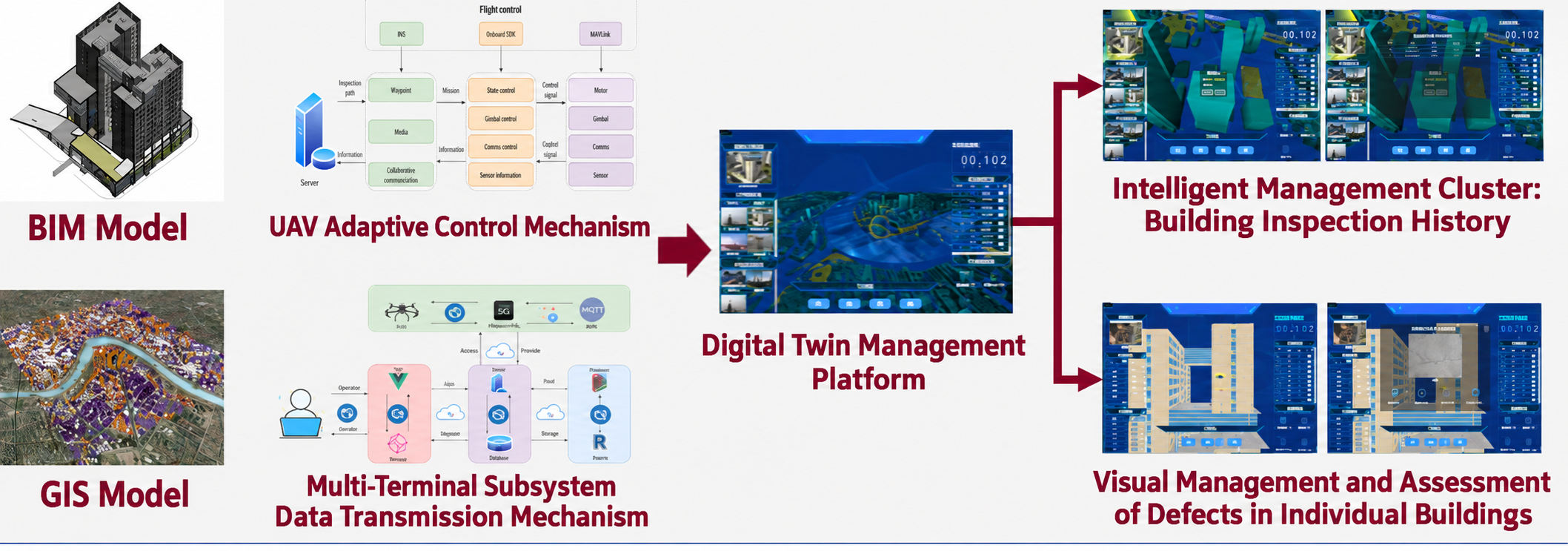
Tan, Y., Yi, W., Chen, P., & Zou, Y. (2024). An adaptive crack inspection method for building surface based on BIM, UAV and edge computing. Automation in Construction, 157, 105161.
Liao, L., Mo, W., Wen, Y., Liu, S., Zou, Y., Mo, L., Wu, C., and Fan, C.* (2025). Safety consultation for prefabricated construction: a localized retrieval-augmented generative question-answering system. Journal of Computing in Civil Engineering, 39(5), 04025076.
Wu, H., Zuo, J., Yuan, H., Zillante, G., & Wang, J. (2023). Investigation of the social and economic impacts of cross-regional mobility of construction and demolition waste in Australia. Resources, Conservation and Recycling, 190, 106814.
Wang, H., Chen, Y., Kang, J., Ding, Z., & Zhu, H. (2023). An XGBoost-Based predictive control strategy for HVAC systems in providing day-ahead demand response. Building and Environment, 238, 110350.
Ouyang, Y., & Luo, X. (2025). Effects of physical fatigue superimposed on high temperatures on construction workers' cognitive performance. Safety Science, 181, 106705.
Cao, R., Leng, Z., Li, D., & Zou, F. (2025). Comparative life cycle assessment of three types of crumb rubber modified asphalt under different system boundaries. Resources, Conservation and Recycling, 212, 107922.
Granted Invention Patents
Method and system for intelligent extraction of building information models based on large language models, ZL 202311529246.3. Inventors: Ding Zhikun, Liu Zhiwei.
Prefabricated component hoisting device and method based on the Internet of Things and Beidou positioning technology, ZL201810076290. Inventors: Li Zhengdao, Wang Jiayuan, Yu Bo, Li Zhusheng.
Intelligent identification and management method for pavement diseases based on BIM and LiDAR technology, ZL202210092105.9. Inventors: Tan Yi, Deng Ting, Chen Penglu, Chen Limei, Zhou Zhixiang.
Intelligent detection method for prefabricated components based on BIM, UAV, and robotic dog, ZL2021111268806.5. Inventors: Tan Yi, Chen Yuzhe, Deng Ting, Chen Limei.
Emergency decision-making method, system, and terminal for collapse accidents in underground engineering construction, ZL202410620162.9. Inventors: Liao Longhui, Mo Wenting, Wen Yuhang, Gan Cuiping.
Representative Awards
Awarded Achievement | Award Category and Level | Year | Owners of the Achievement (in order of attribution) |
Key Technologies for Integrated Construction Management and Control of Urban Rail Transit Based on Digital Twin | Second Prize, Science and Technology Award of the Guangdong Civil Engineering and Architecture Society | 2021 | Wang Jiayuan, Ding Zhikun |
Key Technologies and Application of Whole-Process Waste Reduction and Emission Reduction for Large Projects in High-Density Urban Areas | Second Prize, Science and Technology Award of the Guangdong Civil Engineering and Architecture Society | 2022 | Wu Huanyu, Li Yanqiu, Wu Wenxin, Wu Lingyi, Feng Ganlin, Li Wei, Long Wujian, Yu Yanwei, Ma Jun, Liu Song |
Key Technologies and Application of Whole-Process Waste Reduction, Emission Reduction, and On-Site Recycling for Large Civil Engineering Projects | Second Prize, Environmental Technology Progress Award of the China Environmental Protection Industry Association | 2023 | Li Yanqiu, Wu Huanyu, Jiao Daowei, Sun Xiaohui, Zhang Zicheng, Long Wujian, Wu Lingyi, Peng Mengqi, Cao Taibo, Bu Wei, Ma Jun, Duan Zhenhan, Feng Ganlin, Zhou Min, Liu Song |
Intelligent Air-ground System for Geometric Quality Inspection of Prefabricated Components by Integrating BIM, LiDAR and UAV/UGV | Silver Medal, Geneva International Invention Exhibition | 2024 | Tan Yi |
Key Technologies and Application of Low-Carbon Intelligent Prediction and Monitoring for Public Buildings | Second Prize, Guangdong Provincial Science and Technology Progress Award | 2025 | Fan Cheng, Li Zhengdao, Wang Huilong, Li Renge, Mo Jinhan, He Ying, Li Bin, Dong Meng, Qi Yanlong, Liu Zhou |
Achievement Translation: Technology Transfer / Industrialization Application Cases
The team proposed a complete set of key technologies for intelligent geometric quality inspection of prefabricated building components, which was appraised by the Guangdong Civil Engineering and Architecture Society as possessing significant originality and reaching an internationally leading level. The achievement has important theoretical significance and application value for the transformation and upgrading of building industrialization. The complete technology has been successfully applied to geometric quality inspection of component production in multiple prefabricated component plants and to measured quantity survey work of multiple prefabricated building projects at home and abroad. In total, it has been applied in 5 prefabricated component plant scenarios and 40 prefabricated building projects in China and abroad.
Future Development Plans
Mid- and Long-Term Goals
The mid- and long-term goals cover four aspects: technology leadership and innovation ecosystem, global cooperation network expansion, sustainable development and social value, and education and cultural influence.
Technology Leadership and Innovation Ecosystem
1.Build a world-leading BIM+ digital twin city platform supporting whole-life-cycle management of large-scale infrastructure
2.Break through key smart construction technologies (such as robotic automatic construction, AI design generation, real-time carbon footprint tracking)
3.Lead or participate in formulating 2-3 international or domestic BIM / smart construction standards
Global Cooperation Network Expansion
1.Expand cooperation from Australia to countries along the "Belt and Road" (e.g., Southeast Asia, the Middle East) and establish regional sub-centers
2.Become a smart construction technology consultant for domestic and international institutions
Sustainable Development and Social Value
1.Develop zero-carbon building technologies to support the "dual-carbon" goals of China and Australia
2.Build a smart city evaluation system and promote the construction of livable and resilient cities
Education and Cultural Influence
1.Establish international scholarships to attract top students from around the world to participate in research
2.Publish monographs in Chinese and English, forming school-level theoretical achievements (such as "Smart Construction Methodology")
Short-Term Goals
The short-term goals cover four aspects: technology R&D and standardization, international cooperation and resource integration, industrial application and commercialization, and talent cultivation and discipline development.
Technology R&D and Standardization
1.Complete key technology breakthroughs in BIM and smart construction (such as lightweight BIM engine, multi-source data fusion, digital twin basic platform)
2.Establish a Sino-Australian joint BIM standard system and promote pilot projects for mutual recognition of standards between the two countries (e.g., infrastructure and green building fields)
3.Develop 2-3 core technologies with independent intellectual property rights (such as an AI-driven construction risk early-warning system)
International Cooperation and Resource Integration
1.Regularly hold Sino-Australian BIM technology summits and industry forums to form a regular exchange mechanism
2.Establish joint laboratories or demonstration projects with leading Australian universities (e.g., University of Adelaide, University of New South Wales, RMIT University)
Industrial Application and Commercialization
1.Implement 1-2 benchmark smart construction demonstration projects (e.g., smart construction sites, modular buildings)
2.Promote the popularization of BIM technology in small and medium-sized enterprises and develop low-cost SaaS tools
Talent Cultivation and Discipline Development
1.Launch a Sino-Australian dual-supervisor joint master's/doctoral training program, cultivating 20+ interdisciplinary talents annually
2.Launch BIM+ smart construction micro-credential courses (for engineers, project managers, etc.)
 Back to Top