
 CN
 Search

Full-site Navigation




Research

Team
Underground Polis Academy Of Shenzhen University
Team Basic Information
-
 Team NameUnderground Polis Academy Of Shenzhen University
-
 Affiliated CollegeCollege of Civil and Transportation Engineering
-
 Year Established2018

Team Overview
Research Directions and Features
The Institute adheres to the purpose of making original contributions to the construction of human ecological civilization, is committed to protecting and building a beautiful ecological environment, and is based on exploring the best paths for the synergistic and efficient utilization of urban underground space resources and land resources. Located on the high ground of national development strategy—the Guangdong-Hong Kong-Macao Greater Bay Area—the Institute focuses on major scientific problems and bottleneck technological challenges in national strategies and major infrastructure construction. By integrating next-generation information technologies such as the Internet of Things, big data, and artificial intelligence, and empowering them together with the physical and mechanical properties of traditional geological bodies, geotechnical engineering, underground structural engineering, and full-life-cycle complex systems, it creates a modern engineering discipline for resilient city construction. It thus makes a leading contribution to opening the next generation of civil engineering—“digital-intelligent civil engineering.” Through modern multi-functional in-situ sensing, it obtains various physical and mechanical natures (Nature); through digital twin comparison with existing data knowledge graphs, it predicts changes in geological modality or state (Modality or State) caused by future underground excavation and other activities.


Main Research Directions
- Direction 1:Geotechnical mechanics and modern engineering control theory
- Direction 2:High-performance engineering materials and resilient underground structures
- Direction 3:Digital construction and intelligent operation and maintenance of underground engineering
- Direction 4:Theories and strategies for urban sustainable development
Landmark Technologies / Theories
1.New mechanized construction technology of twin closely-spaced pipe jacking for metro stations
The Institute has systematically constructed the design theory and method for a new prefabricated pipe-jacking station structural system, and revealed the load-bearing mechanism of the temporary-to-permanent force system conversion of new joints and station structures. It has made breakthroughs in key technologies such as new trenchless equipment and supporting construction, developed the world’s largest rectangular pipe-jacking equipment, and overcome a series of bottleneck technical challenges including the assembly of super-large pipe segments, construction disturbance control, and alignment control of closely-spaced construction tunnels. It has established a construction risk and carbon-reduction benefit assessment system for pipe-jacking stations, developed a digital-twin-based intelligent construction control platform and monitoring system for the whole life cycle of station construction and operation and maintenance, and formed a complete set of technologies for the construction, operation, and maintenance of pipe-jacking stations.
2.Complete set of technologies for efficient resource conversion of construction residual sludge and muck
The Institute has established a geopolymer-based multi-phase synergistic solid-liquid separation and solidification coupling method for residual sludge and muck, and revealed the mechanisms of dynamic nucleation strengthening of slurry, construction of multi-phase drainage boundaries, and control of the solidification microenvironment. It has made breakthroughs in the synergistic technologies of rapid coagulation, efficient dewatering, and functional solidification, solving the simultaneous challenge of efficient solid-liquid separation and solidification/stabilization of residual sludge and muck. It has developed a series of residual-sludge-and-muck-based flowable fillers with water resistance, vibration isolation, and large-deformation self-adaptation, constructed a material product system of multi-solid-waste synergistic solidification and polymer functional regulation, and, based on open-closed pore and mesopore regulation, realized water-soil coupled ecological restoration based on residual sludge and muck. It has established an integrated synergistic process suitable for road use, grouting filling, marine ecological restoration, and “one-step” building material utilization, solving the scale-up challenge faced in the resource utilization of residual sludge and muck. It has made breakthroughs in real-time multimodal sensing technology for sludge properties and operating parameters, and developed data-driven intelligent equipment coupling phase separation and resource conversion.
Keywords
Safety, resilience, intelligence, greenness
Team Positioning
 Basic rese
- Applied de
 Industry-a
- Others
Supporting Disciplines
- Pillar discipline:Civil Engineering
- Related disciplines:Transportation Engineering, Computer Science and Technology, Materials Science, Internet of Things Engineering, among others
Research Facilities and Resources
Supporting Platforms
- National Key Laboratory of Intelligent Construction and Healthy Operation and Maintenance of Geotechnical and Tunnel Engineeri
- National Engineering Research Center for Mine Deep Shaft Construction Technology
- Key Laboratory of Resilient Infrastructure for Coastal Cities, Ministry of Education
- Key Laboratory of Coastal Urban Water and Soil Environment Evolution, Ministry of Ecology and Environment
- Shenzhen Key Laboratory of Green, Efficient and Intelligent Construction of Metro Underground Stations
Core Equipment
No. | Equipment | Model |
1 | Brillouin optical frequency domain strain and temperature analyzer | fibrisTerre Ftb5020 |
2 | True triaxial anisotropic stress loading test module | WILLE |
3 | High-pressure environment three-dimensional test module | WILLE |
4 | Dynamic and static test module for seasonally frozen soil | WILLE |
5 | Thaw-settlement compression test module for frozen soil | WILLE |
6 | Compression-torsion coupling test module | WILLE |
7 | Soil dynamic modulus test module | WILLE |
8 | High-resolution strain monitoring system | OSI-S |
9 | Full-scale test apparatus for multi-size, multi-shape underground structures | Independently developed by the Joint Laboratory of Shenzhen University |
10 | In-situ voxel imaging triaxial loading and operation system | nanoVoxel-2000 |
11 | Optical scattering signal analyzer | Ray-Test\FOD-S |
12 | Specific surface area analyzer (BET) | ASAP 2020M+C |
13 | High-performance graphics workstation | AMAX G558 |
Collaboration Network
- Renowned partner universities at home and abroad:Tsinghua University, Tongji University, Hunan University, Central South University, Southwest Jiaotong University, Sun Yat-sen
- Institutions and enterprises:China State Construction International Holdings Limited; China Construction Engineering (Macao) Co., Ltd.; China Construction Th
Research Projects and Achievements
Research Projects and Achievements
Since its establishment, the Institute has undertaken more than 310 government-funded research projects, including projects of the National Natural Science Foundation of China (major projects, key projects, Science Fund for Distinguished Young Scholars projects, general projects, etc.) and projects of the National Key R&D Program, with government-funded research funding exceeding 320 million yuan.At the same time, it has undertaken more than 160 industry-funded research projects related to the Hong Kong Lantau Tomorrow Vision, the T2 Terminal Area of Shenzhen Airport, Huajiachi Station of Hangzhou Metro Line 18, the Sanya River Estuary Passage, the Zhuhai Mangzhou Tunnel, the Jiangyin-Jingjiang Yangtze River Tunnel, the Shizimen Tunnel Project, and others, with industry-funded research funding exceeding 170 million yuan. The Institute pioneered a new technology for the mechanized construction of twin closely-spaced pipe jacking for underground metro stations, which has been successfully applied to the construction of Shajing Guxu Station of Shenzhen Metro Line 12.
It also innovatively proposed the safety construction control theory and key technologies for underground space in the metro domain, realizing contiguous development of underground space 3 m away from tunnel structures and releasing a large amount of land resources.
Through undertaking a series of national major/key consulting, basic research, and R&D projects, the Institute has formed a basic theory and technical system for underground space resilience:
⦁2023: Strategic Research on the Safety and Resilience of Three-Dimensional Space in Megacities under Extreme Conditions
⦁2023: Key Technologies and Applications for Smart Operation and Maintenance of Three-Dimensional Networked Space in Urban Station-City Integration
⦁2022: Key Technologies for the Resilience System of Urban Underground Space Structures
⦁2022: Strategic Research on the Development of Urban Underground Intelligent Logistics Systems
⦁2021: Complete Set of Intelligent Technologies and Systems for the Prefabrication and Assembly of New Resilient Tunnel Structures
⦁2021: ******* Protection Technology for Urban Underground Utility Tunnels
⦁2021: Research on the Construction Technology System for Underground Space Development
⦁2020: Basic Theory of Resilience of Deep Underground Space in Megacities
⦁2019: Key Technologies for Trenchless Metro Stations in Bustling Urban Areas
⦁2019: Theory and Methods for Safety Control of Urban Underground Engineering Construction and Operation
⦁2018: Strategic Research on the Development of Future Resilient Urban Underground Space toward 2035

Flagship Research Projects
Project | Principal Investigator | Project Type | Duration (Years) |
Basic theory of resilience of deep underground space in megacities | Chen Xiangsheng | Chen XiangshengMajor Project of the National Natural Science Foundation of China | 2021-2025 |
Theory and methods for safety control of urban underground engineering construction and operation | Chen Xiangsheng | Chen XiangshengKey Project of the National Natural Science Foundation of China | 2020-2024 |
Key technologies and applications for smart operation and maintenance of three-dimensional networked space in urban station-city integration | Chen Xiangsheng | National Key R&D Program Project | 2023-2026 |
Key technologies for the resilience system of urban underground space structures | Cui Hongzhi | National Key R&D Program Project | 2022-2025 |
Urban operation safety and emergency support under extreme conditions | Chen Xiangsheng | Strategic Research and Consulting Project of the Chinese Academy of Engineering | 2022-2025 |
Complete set of intelligent technologies and systems for the prefabrication and assembly of new resilient tunnel structures | Chen Xiangsheng | Shenzhen High-Level Talent Project | 2021-2026 |
eismic resilience of geotechnical engineering and underground structures | Bao Xiaohua | Young Scientists Fund Project (Category A) of the National Natural Science Foundation of China | 2026-2030 |
Research on the response mechanism and intelligent control of large-diameter shield tunneling in complex geological environments with boulders under the seabed | Su Dong | International (Regional) Cooperation and Exchange Project of the National Natural Science Foundation of China | 2025-2028 |
Indoor air purification | Mo Jinhan | Science Fund for Distinguished Young Scholars of the National Natural Science Foundation of China | 2024-2028 |
Intelligent back analysis of geotechnical engineering and its engineering application | Jin Yinfu | Science Fund for Excellent Young Scholars (Overseas) of the National Natural Science Foundation of China | 2021-2023 |
Research on key technologies for green and efficient reclamation and island construction of the Hong Kong Lantau Tomorrow Vision | Chen Xiangsheng | Industry-funded project | 2023-2026 |
Special research service project on railway-related underground engineering of the station cluster across existing rail transit in the T2 Terminal Area of Shenzhen Bao’an International Airport | Chen Xiangsheng | Industry-funded project | 2026-2031 |
Modern technology for intelligent pre-control of disasters in slurry shield engineering of water conveyance tunnels in high-water-pressure and abrupt-change strata | Chen Xiangsheng | Industry-funded project | 2020-2023 |
Research on key technologies for long-distance jacking of deep-buried, high-water-pressure, super-large-section prefabricated rectangular pipe jacking | Chen Xiangsheng | Industry-funded project | 2025-2027 |
Special technical service project on freezing technology for the Sanya River Estuary Passage and the pipe-roof section of the Shenzhen-Jiangmen Railway | Chen Xiangsheng | Industry-funded project | 2025-2028 |
Flagship Research Projects
High-Impact Publications
Chen Xiangsheng, Shen Jun,Bao Xiaohua, Wu Xianlong, Tang Waiching & Cui Hongzhi.(2023). A review of seismic resilience of shield tunnels. Tunnelling and Underground Space Technology incorporating Trenchless Technology Research,136.
Xiaohua Bao, Yingpeng Li, Xiangsheng Chen, Haoyu Yang & Hongzhi Cui.(2024).Experimental investigation on axial compressive and splitting tensile behaviour of reinforced concrete with a low content of hybrid steel fibres. Construction and Building Materials,428,136315.
Dong Su, Wei Hong Yang,Xing Tao Lin,Xiao Zhang,Zhiyu Zhang & Xiangsheng Chen.(2024).Soil-carrying effect induced by super-large-diameter shallow-buried shield tunneling and treatment measures: A case study in Zhuhai, China.Tunnelling and Underground Space Technology incorporating Trenchless Technology Research,153,106037-106037.
Tong Qiu, Xiangsheng Chen, Dong Su, Kunyang Chen, Qiufeng He, Zhenji Zheng. & Yanshuai Wang.(2024).LEGO®-inspired decision-making model for automatic constructionof precast diaphragm walls. Automation in Construction,166,105667-105667.
Chengyu Hong,Wei Rao,Tong Qiu,Xiangsheng Chen,Lei Wang,Wei Li & Wensheng Yang.(2024).Development of a theory-monitoring integrated structure joints assessment method of prefabricated underground stations.Tunnelling and Underground Space Technology incorporating Trenchless Technology Research,153,106046-106046.
Wang Lei, Chen Xiangsheng, Su Dong, Liu Shuya, Liu Xian, Jiang Shouchao. & Yang Wensheng.(2023).Mechanical performance of a prefabricated subway station structure constructed by twin closely-spaced rectangular pipe-jacking boxes. Tunnelling and Underground Space Technology incorporating Trenchless Technology Research,135.
Fu Yanbin, Chen Lei, Xiong Hao, Chen Xiangsheng, Lu Andian, Zeng Yi & Wang Beiling.(2024).Data-driven real- time prediction for attitude and position of super-large diameter shield using a hybrid deep learning approach. Underground Space,15,275-297.
Zhao Debo, Huang Yutao, Chen Xiangsheng, Han Kaihang, Chen Cheng, Zhao Xiaofeng & Chen Weitao.(2023).Numerical investigations on dynamic responses of subway segmental tunnel lining structures under internal blasts.Tunnelling and Underground Space Technology incorporating Trenchless Technology Research,135.
Cui Hongzhi, Zou Yang, Yang Haibin & Bao Xiaohua.(2023).Thermal-mechanical behaviors of concrete with innovative salt hydrate PCM-based thermal energy storage aggregate. Energy Conversion and Management,293.
Shen Xiang ,Chen Yifan, Cao Liqiang ,Chen Xiangsheng, Fu Yanbin & Hong Chengyu.(2024).Prediction of the slurry pressure and inversion of formation characteristics based on a machine learning algorithm during tunnelling in a fault fracture zone. Tunnelling and Underground Space Technology incorporating Trenchless Technology Research,144.
Chen Xiangsheng, Quan Zhaoxi, Chen Yifan, Shen Xiang, Su Dong. Main problems and development trends faced by tunnel construction in extreme environments. Tunnel Construction (Chinese and English), 2024, 44(3): 401-432.
Chen Xiangsheng, Wang Heng, Song Zhaoyang, et al. Current status and development trends of mechanized excavation of frozen vertical shafts. Coal Science and Technology, 2024, 52(09): 1-17.
Xiangsheng Chen, Qiufeng He, Jinshan Qiu, Lei Wang, Dong Su, Meilin Liu, Kunyang Chen, and Tong Qiu.(2025). .Simultaneous construction of subways and utility tunnels: A case project in Shenzhen, China. Tunnelling and Underground Space Technology incorporating Trenchless Technology Research, 158106421-106421
Tong Qiu,Wei Rao,Kaibin Ye,Xiangsheng Chen,Beiyu Wu,Xiaohua Bao.(2026).Modeling and compensation of assembly uncertainties for joints in prefabricated underground structures: experimental, numerical, theoretical study. Tunnelling and Underground Space Technology incorporating Trenchless Technology Research, 167107047-107047
Granted Invention Patents
Su Dong, Chen Xiangsheng, Wang Lei, Chen Jianhang, Qiu Tong, Liu Shuya, Sun Bo, Li Wei, He Jun, Ma Xiaobin, Gao Hao, Yang Wensheng. A structural conversion method for forming an integral metro station by twin closely-spaced pipe jacking. CN116446926B
Bao Xiaohua, Yuan Huaicen, Chen Xiangsheng, Cui Hongzhi, Shen Jun, Xia Changqing, Li Junhong. An undisturbed soil sampling and preservation device and method. CN116399638B
Ji Fengling, Li Wei, Chen Xiangsheng, Lü Qingfeng, Li Qiang, Peng Yuansheng, Yu Jingjing, Zhu Guofei, Li Miaoge. A calculation method for the initiation particle size of gravel eroded by sheet flow on piedmont alluvial fans. CN118051699B
Sun Xiaohui, Liao Bowen, Sun Zongbo, Dong Zijun, Chen Xi, Chen Xiangsheng, Chen Ziyi, Chen Guilin, Bi Yuefeng, Lü Guo, Chen Lan. An intelligent multifunctional resource utilization processing method and system for waste muck.
Han Kaihang, Zhai Zhiyuan, Chen Xiangsheng, Cui Hongzhi, Zhang Dongmei, Bao Xiaohua, Wang Shuying, Zhang Chengping, Wei Gang. A safety and resilience evaluation method for existing tunnel structures under adjacent construction disturbance. CN118115317B
Chen Xiangsheng, Bao Xiaohua, Shen Jun, Han Zhen, Liu Ziming. Construction management method and system utilizing the underground space of cross-operating metro tunnels. CN119740973B
Su Dong, Gong Haofeng, Chen Xiangsheng, Zeng Shiqi, Li Qiang, Yang Lei, Mo Zexin, Li Rongkang. Emergency decision-making method and system for large passenger flow at transportation hubs, and readable storage medium. CN121032758B
Representative Awards
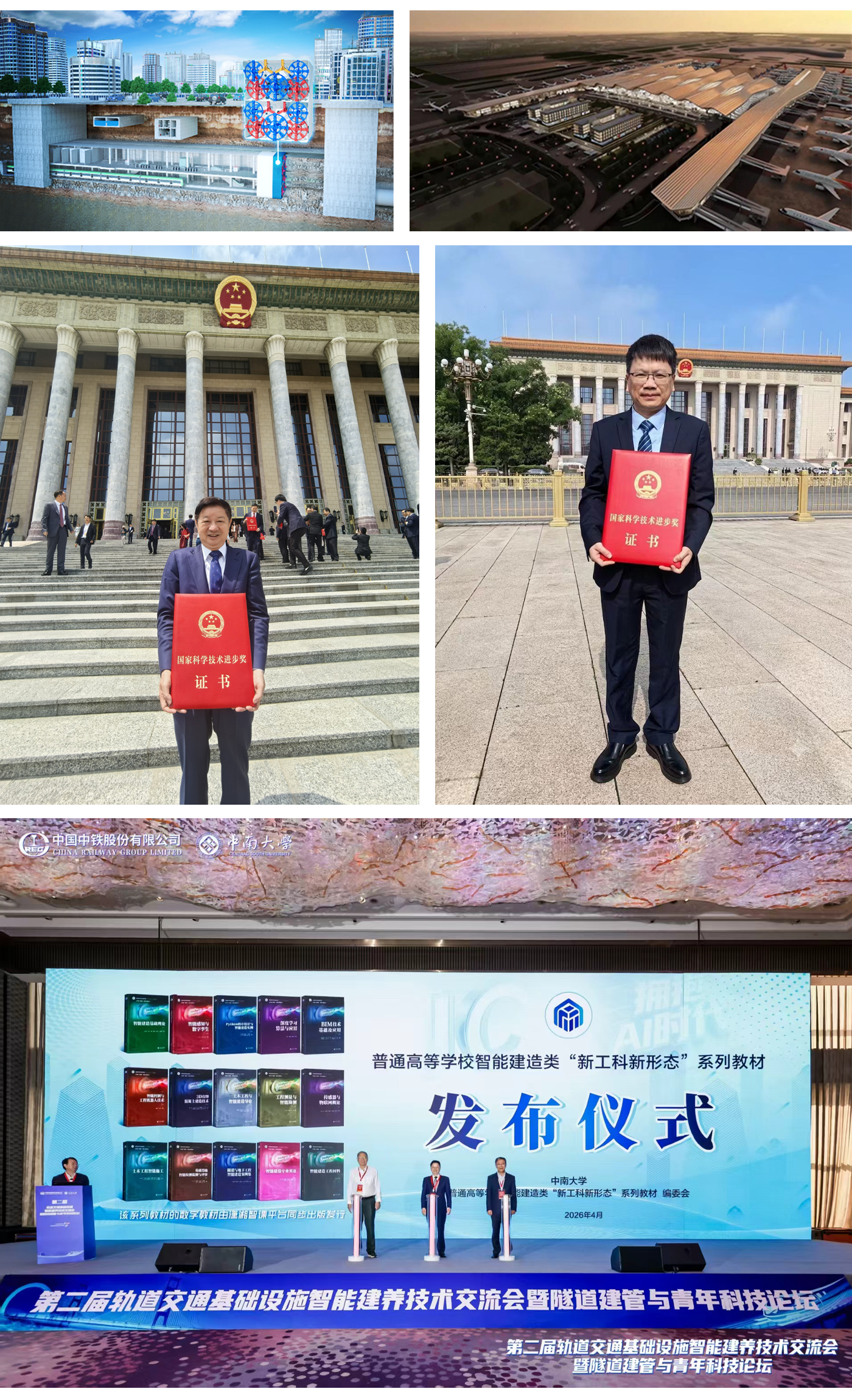
“Control Theory, Key Technologies and Applications for Safe Construction of Underground Space in the Metro Domain” won the Second Prize of the 2025 National Science and Technology Progress Award
“Exploration and Practice of the Cultivation of Compound Talents in Digital-Intelligent Civil Engineering Driven by National Strategy and Disciplinary Intersection” won the Special Prize (Undergraduate) of the 2025 Guangdong Provincial Teaching Achievement Award
“Disaster Mechanism and Key Control Technologies of Dynamic Coupling between Strata and Underground Structures” won the First Prize of the 2022 Science and Technology Progress Award of the Ministry of Education
“Key Technologies and Applications for Resilience-Oriented Intelligent Construction and Maintenance of Shield Tunnel Structures” won the First Prize of the 2025 Guangdong Provincial Science and Technology Progress Award
“Research on the Mechanical Properties of Shield Muck and High-Quality Tunneling Technology” won the First Prize of the 2024 Guangdong Provincial Science and Technology Progress Award
“Research and Application of Key Technologies for High Energy Efficiency of Energy Underground Structures” won the First Prize of the 2023 Guangdong Provincial Technology Invention Award
“Evolution Mechanism of Structure-Rock and Soil Performance of Near-Operating Metro Tunnels and Complete Set of Technologies for Underground Space Development” won the First Prize of the 2021 Guangdong Provincial Science and Technology Progress Award
“Key Technologies and Applications for Precise Crack Control of Mass Concrete” won the First Prize of the 2024 Anhui Provincial Science and Technology Progress Award
“Construction Technology of Twin Closely-Spaced Pipe Jacking for Underground Metro Stations” won the 2024 China Trenchless Outstanding Technology Award
“Theory and Key Technologies of Anchorage and Seismic Resistance of Geotechnical Engineering under Complex Conditions” won the Special Prize of the 2023 Science and Technology Progress Award of the Chinese Society for Rock Mechanics and Engineering
“Close-ft, twin tunnel pipe jacking technology for subway station construction” won the 2025 Innovation Technology Award of the International Society for Trenchless Technology
Future Development Plans
Academic Activities
The Institute adheres to the combination of “bringing in” and “going out,” and carries out in-depth multidisciplinary and multi-perspective exchanges and discussions through various means such as conducting exchange activities, hosting academic conferences, and participating in academic conferences, thereby improving the level of scientific research cooperation and exchange.
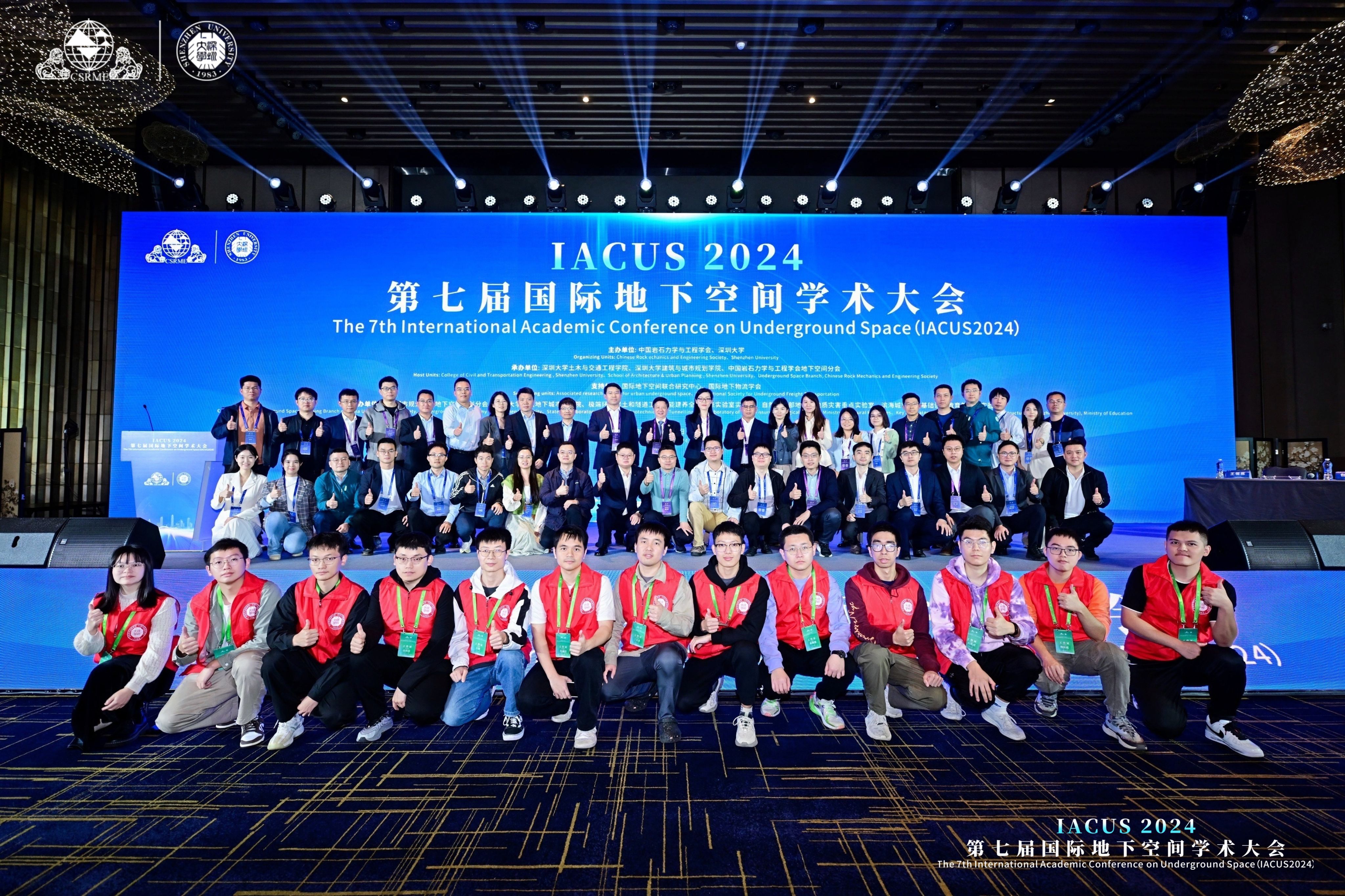
In recent years, it has successfully hosted/co-hosted important academic conferences such as the 2nd Academic Conference on Intelligent Construction and Maintenance of Geotechnical and Tunnel Engineering in Extreme Environments, the 2025 4th China Tunnel and Underground Space Conference, and the 12th International Conference on Underground Space Development.
These also include the 8th Symposium on Engineering Risk and Insurance Research, the 2025 Guangdong-Hong Kong-Macao Greater Bay Area Metro Industry Conference, the 2024 Youth Academic Conference on Sustainable Development of Tunnels and Underground Engineering, and the 7th International Conference on Underground Space.
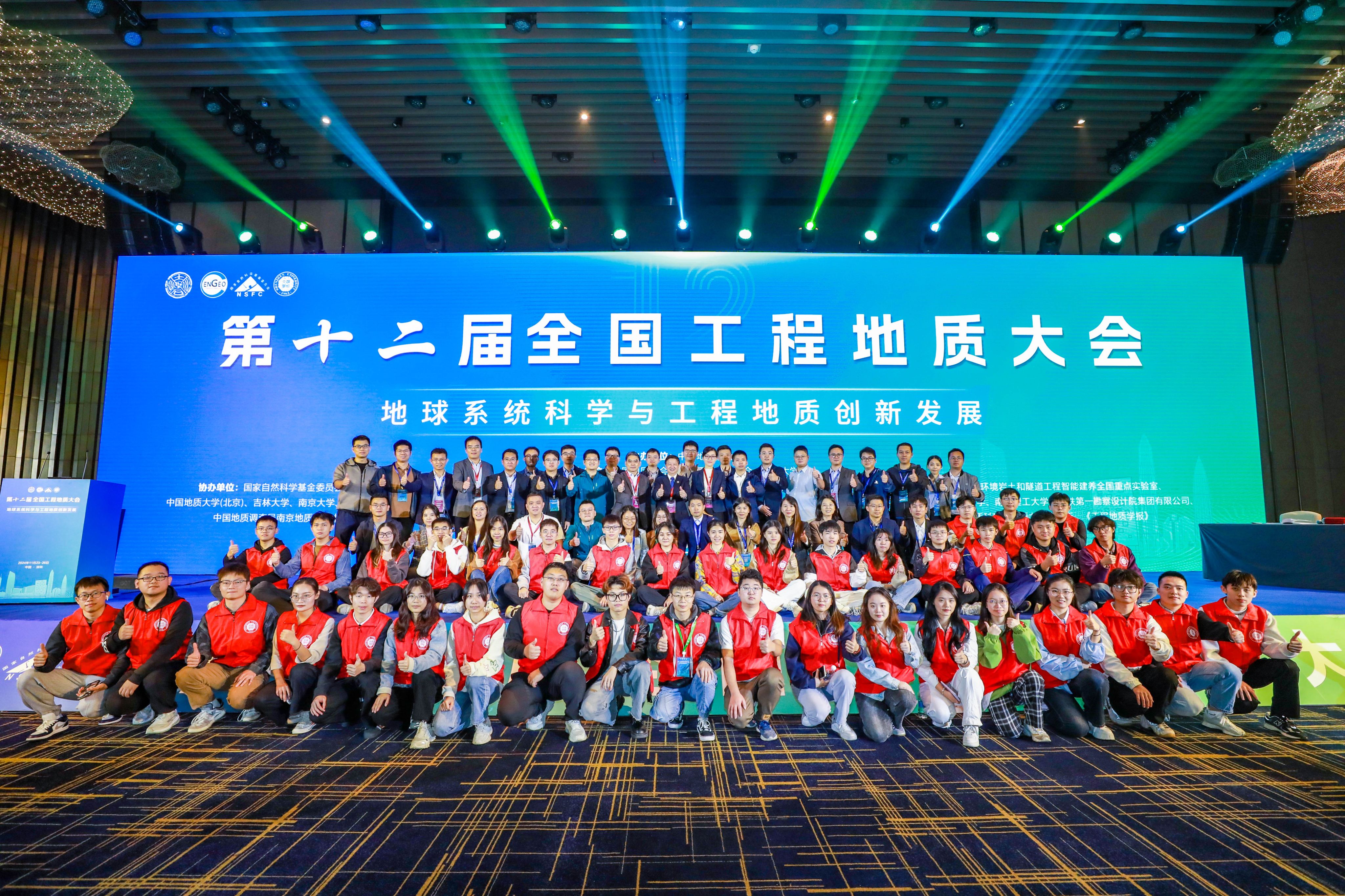
In addition, there were the 12th National Engineering Geology Conference, the 11th International Conference on Underground Space Development, the 2024 Guangdong-Hong Kong-Macao Greater Bay Area Young Geotechnical Scholars Forum, the 9th High-Level Forum on Geotechnical Constitutive Theory, and the 2nd ASCE Greater China Forum, actively promoting scientific research, technological progress, and research exchange and cooperation in related fields.


Future Development Plans
Mid- and Long-Term Goals
Comprehensively establish a complete multi-source information sensing technology system for geotechnical bodies in extreme environments, with the accuracy of intelligent multi-source information sensing reaching 85%;
Make breakthroughs in engineering disaster pre-control technologies for typical sensitive scenarios in dense cities, such as adjacent construction of large and complex underground engineering (groups), development of deep underground space, and expansion and renovation of urban underground space, with an effective disaster prevention and control rate of 95%;
Comprehensively establish an intelligent evaluation and repair technology system for underground space structural defects, achieving defect positioning accuracy better than 0.5 m, identification accuracy >90%, and a 40% reduction in manpower input for engineering operation and maintenance.
Short-Term Goals
Preliminarily establish a multi-source information sensing technology system for geotechnical bodies in extreme environments, with the accuracy of intelligent multi-source information sensing reaching 70%;
Preliminarily establish a green and low-carbon construction technology system and an intelligent evaluation and repair technology system for underground space structural defects.
 Back to Top